

Photos Credit: Tohoku University
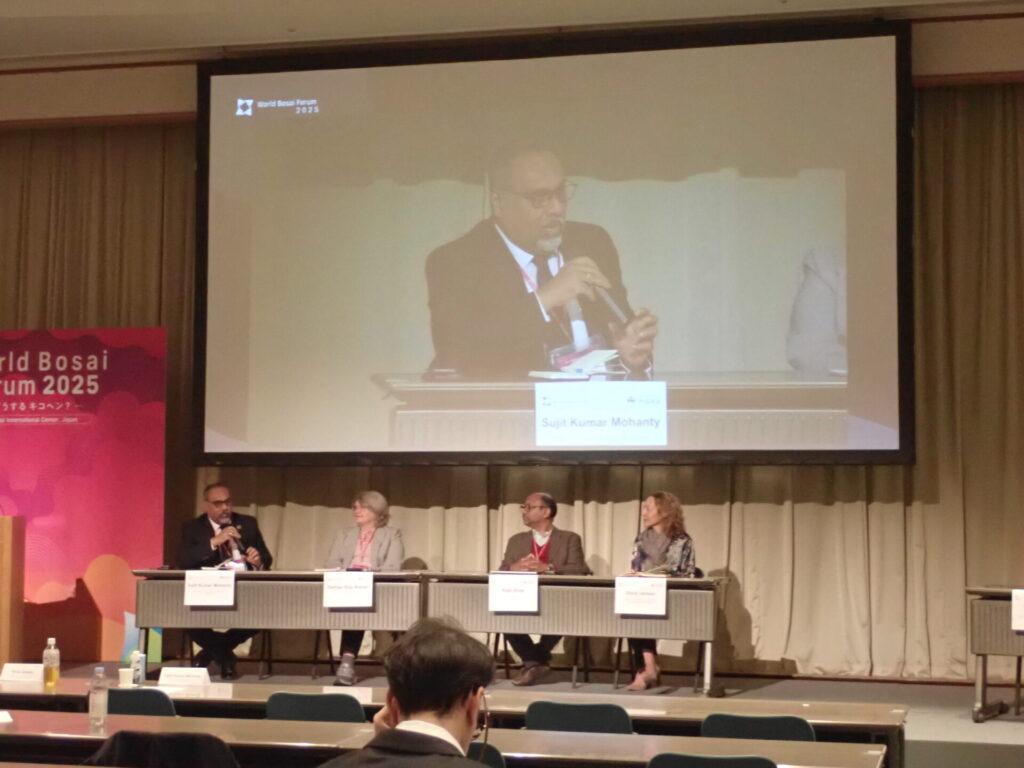
At the 2025 World Bosai Forum (WBF) held from March 7 to 9 in Sendai, Japan, the APRU Multi-Hazards Program and the International Research Institute of Disaster Science (IRIDeS) at Tohoku University co-hosted a dynamic session titled “Tackling a Global Challenge: Multi-Hazards—The Role of Academia, Science, and Technology in Disaster Risk Reduction.”
The session brought together leading researchers and policy experts from across the Pacific Rim to explore how science, technology, and academic collaboration can address the growing complexity of disaster risks in the region. Panelists included representatives from the National University of Singapore, the University of Hawaii at Manoa, Keio University, and the United Nations Office for Disaster Risk Reduction (UNDRR).
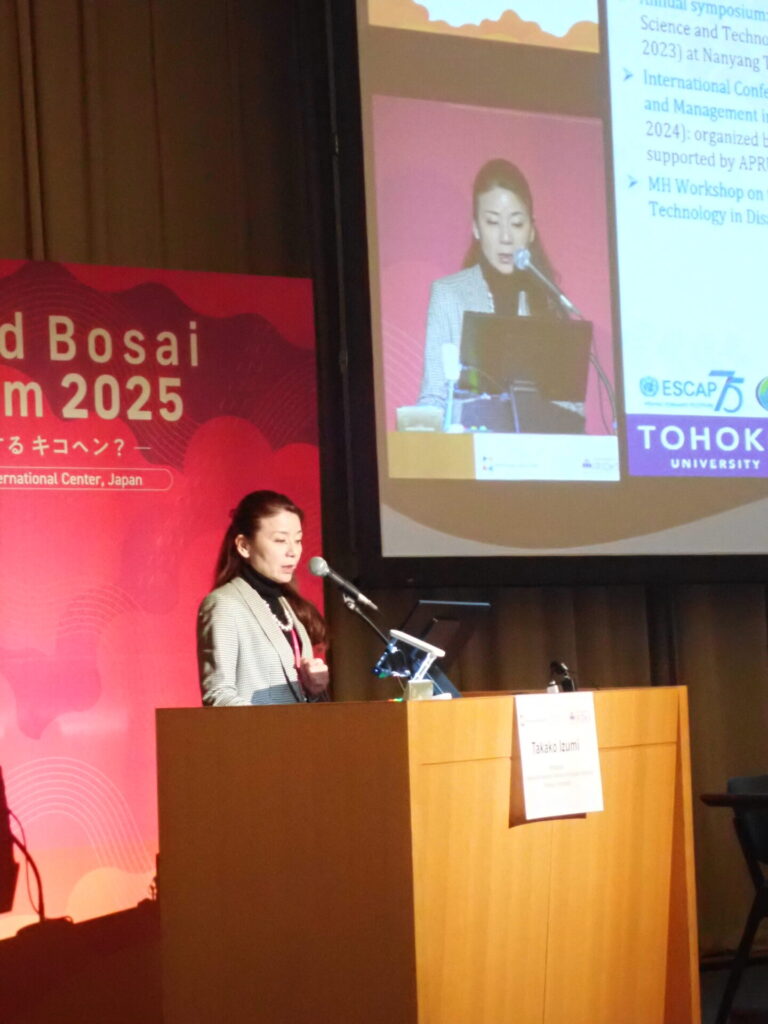
Moderated by Prof. Takako Izumi, Director of the APRU Multi-Hazards Program and faculty at Tohoku University, the session emphasized the need for innovative, inclusive, and science-based approaches to disaster risk reduction (DRR).
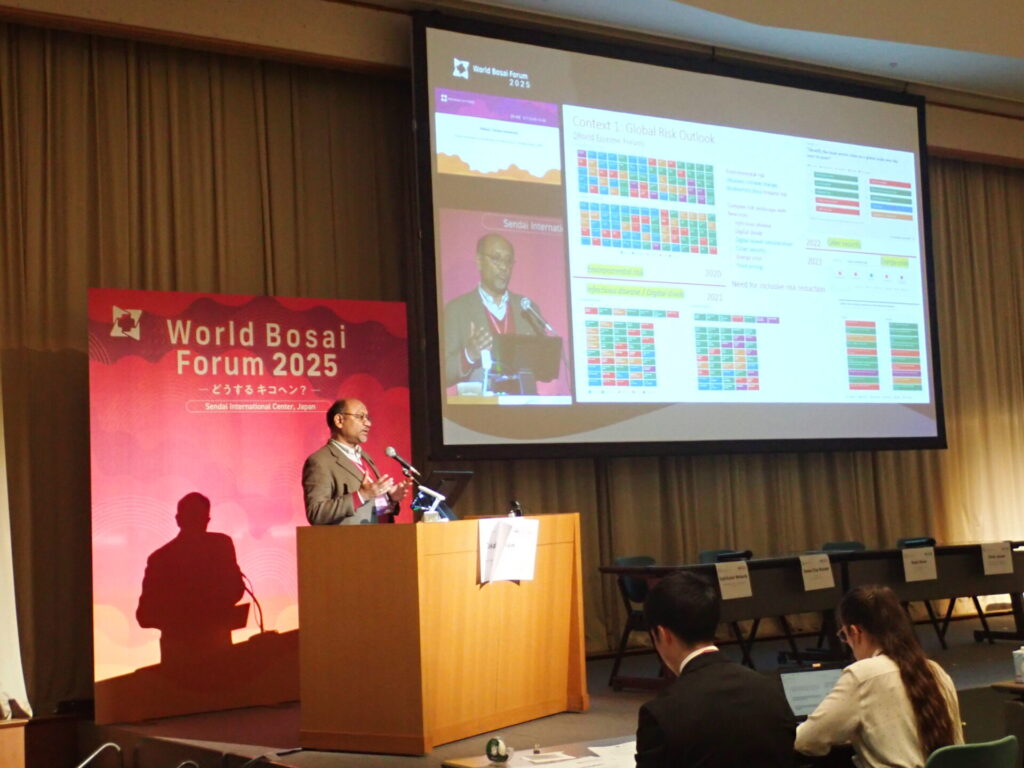
Prof. Rajib Shaw of Keio University highlighted the importance of adaptive governance and innovation to address complex risks nowadays. He cited examples such as virtual reality-based disaster education, smartphone-enabled community damage reporting, and early warning systems for remote areas.
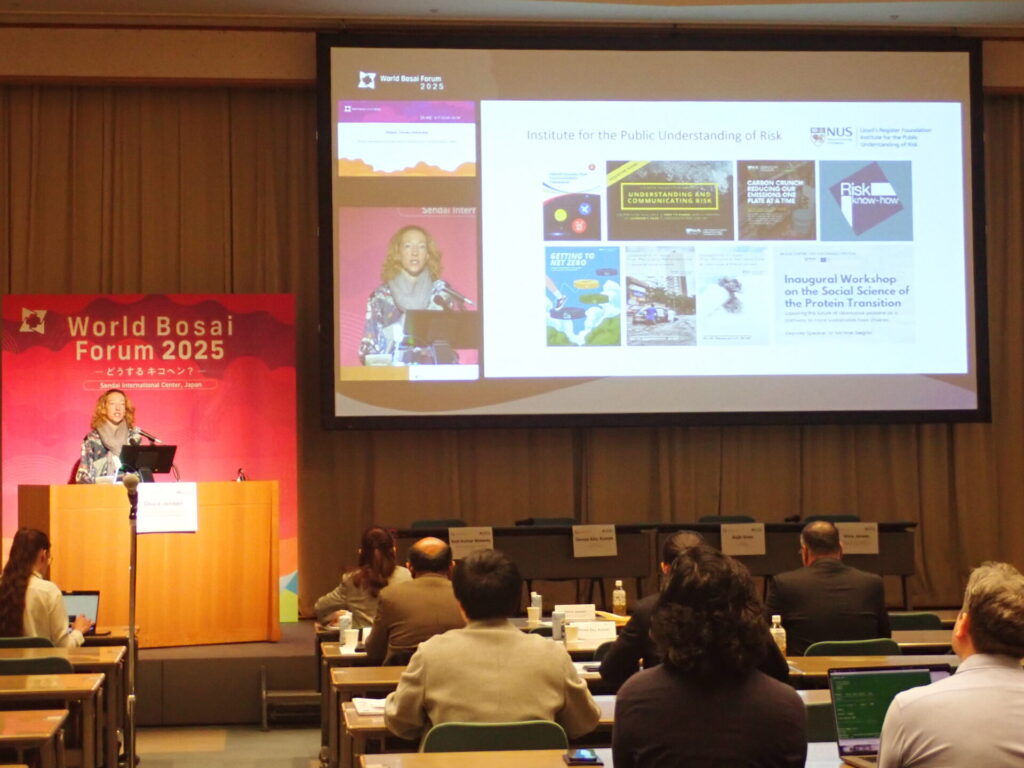
Prof. Olivia Jensen from the National University of Singapore stressed the critical role of social sciences in understanding risk perception and behavior, noting that effective DRR strategies must account for the subjective and complex nature of risk.
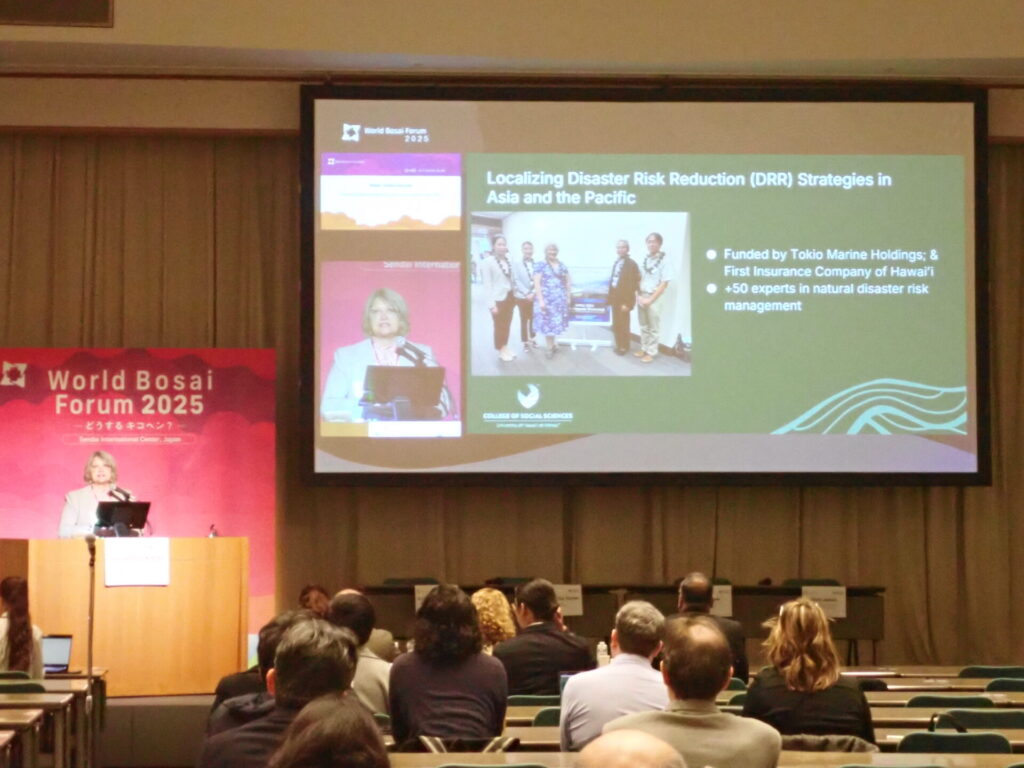
Prof. Denise Konan of the University of Hawaii at Manoa shared insights from the 2023 APRU Multi-Hazards workshop, which focused on localization. The event, held in partnership with the private sector, addressed four themes: humanitarian assistance, the all-hazards approach, early warning risk communication, and inclusive DRR.
Dr. Sujit Mohanty of UNDRR Geneva underscored the critical gap between technological innovation and practical implementation. While the private sector has developed advanced tools—such as AI-powered flood forecasting and early warning systems—many countries, including developed ones, lag behind in adopting these technologies. He emphasized the need for stronger collaboration among governments, academia, and industry to ensure these innovations are effectively integrated into disaster risk reduction efforts.
The session reaffirmed APRU’s commitment to fostering cross-sectoral collaboration and leveraging academic expertise to build more resilient communities across the Pacific Rim.