
APRU FELLI Research-Intensive Field Course 2026
June 7, 2027 - June 21, 2027

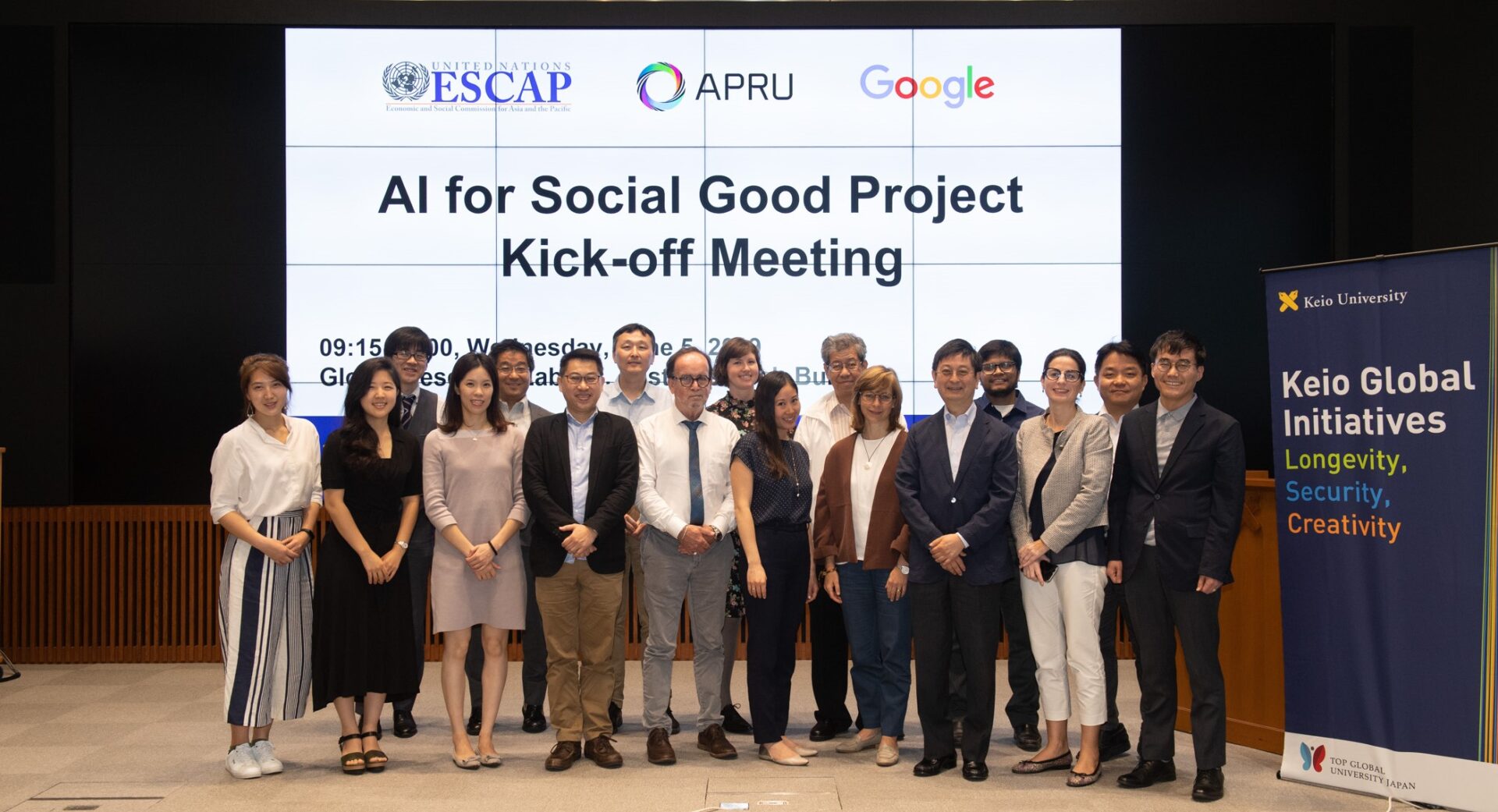
While the AI research ecosystem is growing, there is currently still limited research into how AI can positively transform economies and societies. In light of this, United Nations ESCAP, APRU and Google partnered in 2018 to fill this void by developing a network of regional scholars to formulate policies and strategies that support, advance and maximize AI for Social Good.
The project draws on new insights for the development of a set of papers and report to inform senior policy makers, experts, and governments how to cultivate an ecosystem. The aim is to foster and enhance AI for social good within economies and identify what government approaches will address the challenges associated with AI while maximizing the technology’s potential. The project is implemented in two phases, with outcomes:
Phase I (2018-2020)
UNESCAP-APRU-Google AI for Social Good Summit 2020
Report: Artificial Intelligence for Social Good (2020)
Policy Insights Brief 1:Four Abilities for Governments to Leverage AI for Social Good (2020)
Policy Insights Brief 2: Seven Challenges to Govern AI (2020)
Phase II (2021-2024)
Projects with the Thai Government
Paper 1: Addressing Challenges in Data Sharing for TPMAP (2023)
Paper 2: Responsible Data Sharing, Ai Innovation And Sandbox Development: Recommendations For Digital Health Governance (2023)
Projects with the Bangladeshi Government
Paper 1: Mobilizing Artificial Intelligence for Maternal Health in Bangladesh (2023)
Paper 2: Artificial Intelligence in Pregnancy Monitoring: Technical Challenges for Bangladesh (2023)
Phase II Final Report: AI For Social Good, Strengthening Capabilities & Governance Case Studies of Thailand and Bangladesh (2024)
Back to the Artificial Intelligence main page
Address: APRU International University Centre, Unit 902, Cyberport 2, 100 Cyberport Road, Hong Kong
Email: [email protected]
Telephone: +852 2117 7060
Fax: +852 2117 7080