
Photos Credit: University of the Philippines Diliman
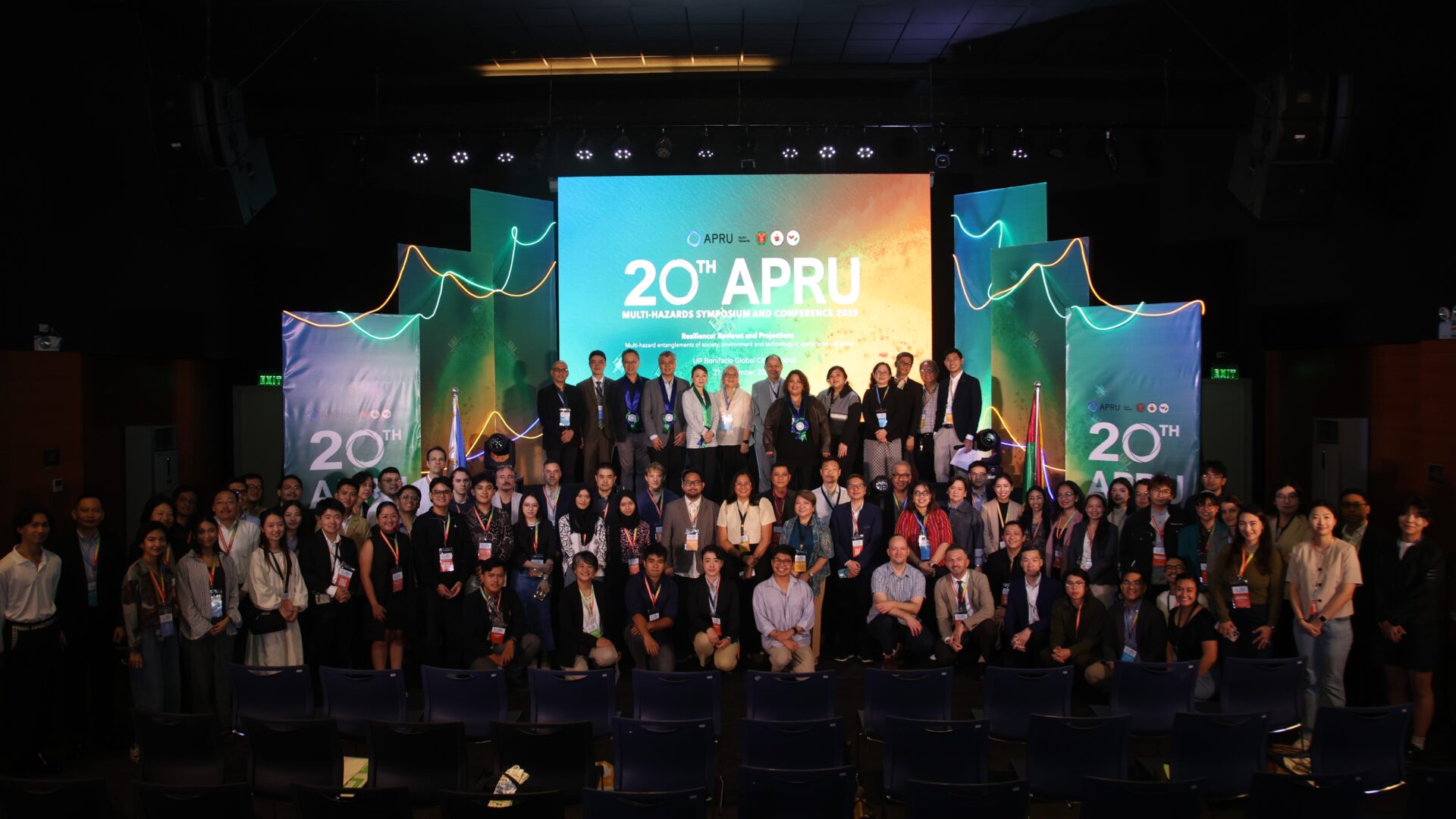
The 20th APRU Multi-Hazards Symposium 2025 (APRU-MH20), held from November 26 to 29 in Bonifacio Global City (BGC), Metro Manila, brought together more than 120 participants from 38 organizations across 13 economies. Hosted by the University of the Philippines (UP) Diliman through its College of Architecture and College of Engineering, the four-day gathering explored the theme “Resilience Reviews and Projections: Multi-Hazard Entanglements of Society, Environment, and Technology in Space, Time and Place.”
Bridging Research, Practice, and Policy
The symposium featured plenary sessions, parallel tracks, and special forums that examined resilience through interdisciplinary lenses—architecture, engineering, policy, and community engagement.
“Architects, landscape architects, environmental planners and engineers are now becoming advocates for nature-based solutions, skewing some of their practices despite the status quo of unsustainable efforts,” said Chancellor Edgardo Carlo Vistan of UP Diliman. “I firmly believe that our convenors are leading the way towards sustainable practice and resilience advocacy, and are educating and training our students in these same principles.”
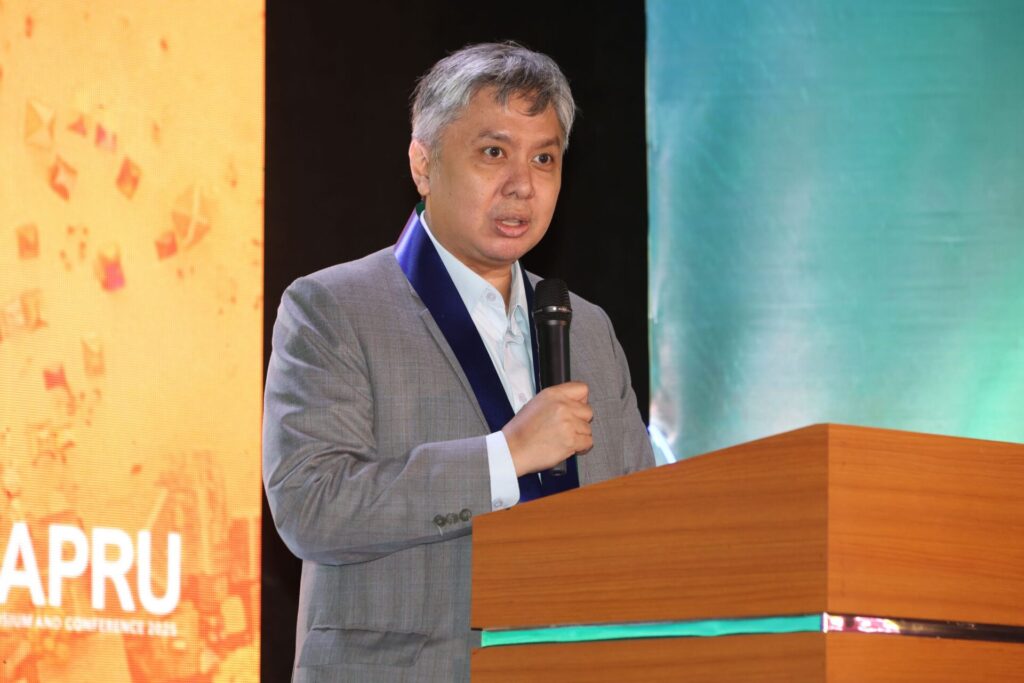
Chancellor Edgardo Carlo Vistan of the University of the Philippines Diliman
Four keynote sessions set the intellectual foundation for the symposium. Prof. Jeffrey Hou from National University of Singapore (NUS) opened discussions on civic resilience, while science communicator Beatrice Tulagan addressed solidarity ecologies and community resilience. On the second day, Mayor Alfredo Coro II shared experiences in achieving the Sustainable Development Goals at the municipal level in Del Carmen, and AI expert Dominic Ligot examined the emerging intersection of artificial intelligence and climate and disaster resilience.
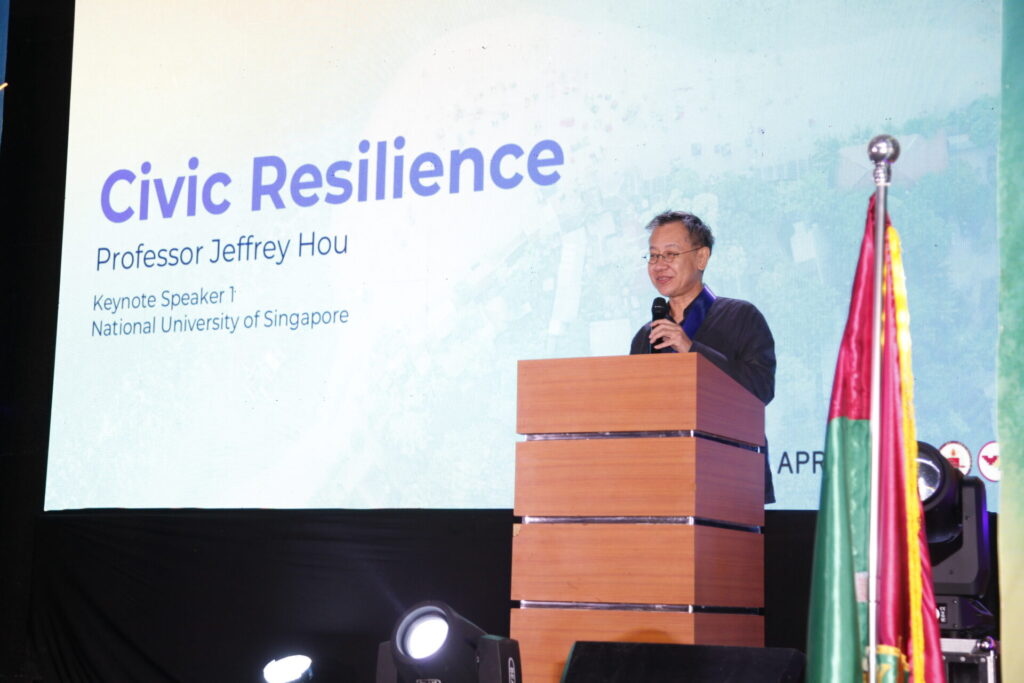
Prof. Jeffrey Hou from National University of Singapore
“The diversity and complexity of hazards confronting society continue to expand, extending beyond natural hazards to include technological, biological, and human-induced threats,” said APRU Multi-Hazards Program Director Takako Izumi, a professor from the International Research Institute of Disaster Science (IRIDeS) at Tohoku University, Japan. “Confronting these multifaceted risks requires collective wisdom and shared action.”
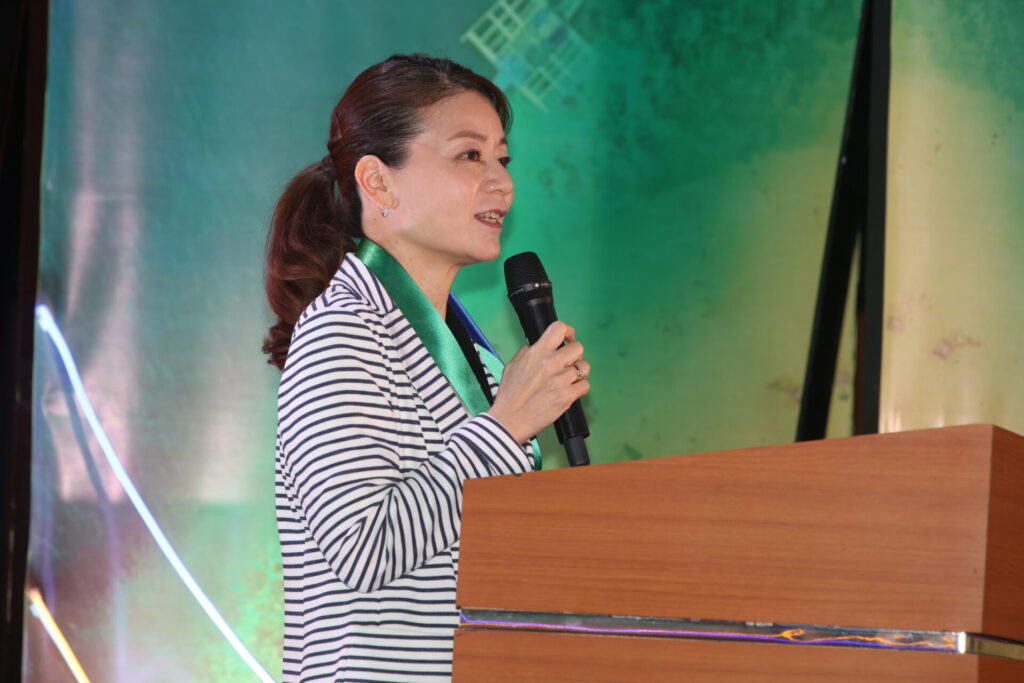
APRU Multi-Hazards Program Director Takako Izumi
Local Practices and Natural-based Solutions
The symposium’s parallel sessions covered diverse topics such as intersectionality in disaster risk, heritage conservation, resilient design, and citizen science. Presentations highlighted community-based flood resilience in Philippine cities, gender-responsive disaster response, indigenous knowledge integration, digital tools for vulnerability assessment, machine learning applications for early warning systems, and ecosystem services valuation in urban river corridors.
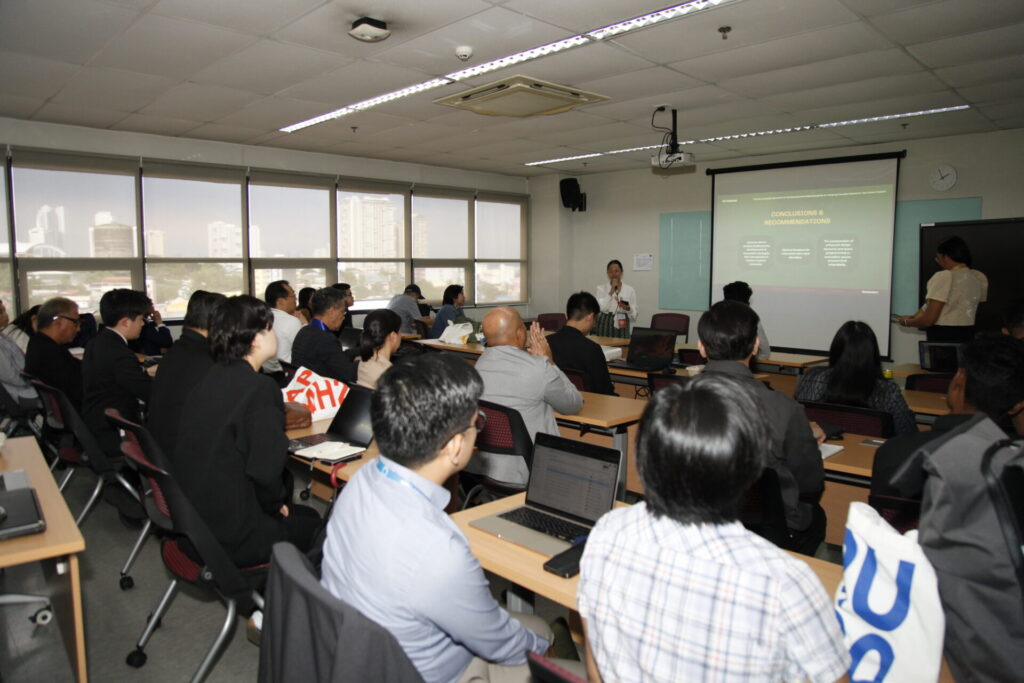
A special session convened by Prof. Takako Izumi focused on localization of disaster risk reduction, gathering speakers from Singapore, Taiwan, Korea and Japan to share insights on strengthening alignment between international frameworks and place-based implementation.
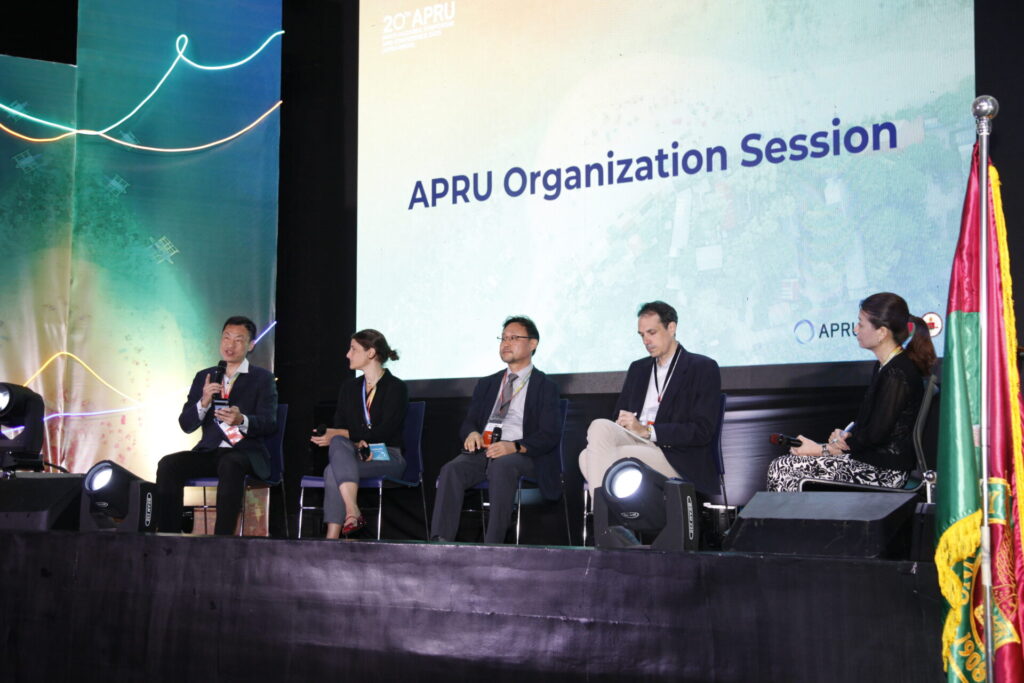
A video developed by Earth Observatory Singapore (EOS) at Nanyang Technological University (NTU Singapore) was premiered at the symposium. It offered insights into volcanic risk and community adaptation strategies based on the interviews with scientists and residents living near Mount Mayon, the most active volcano in the Philippines.
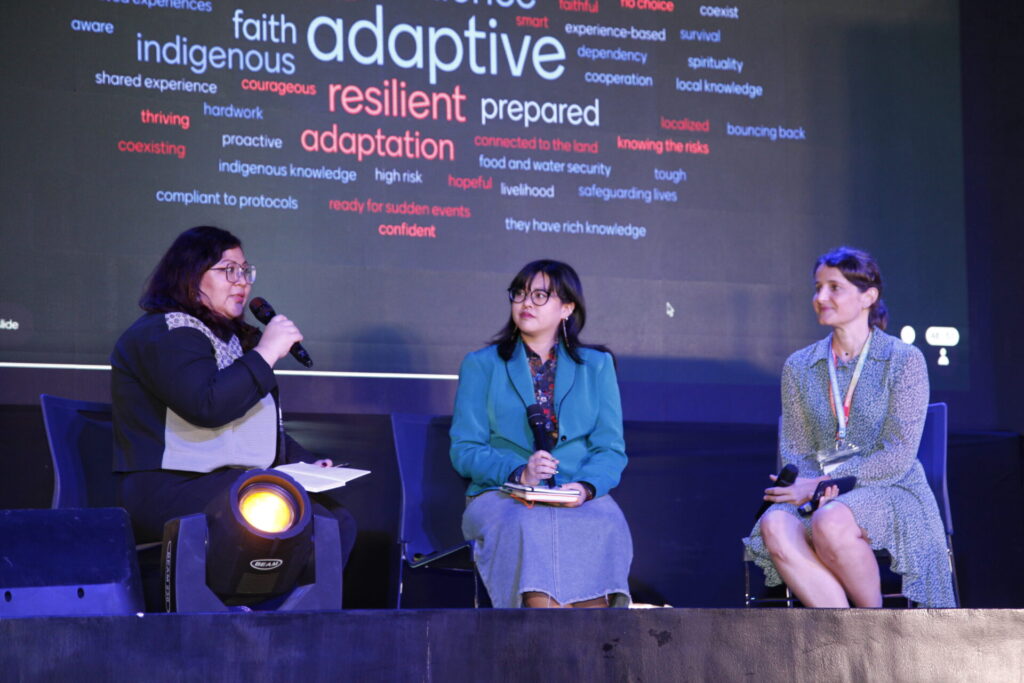
In addition, participants attended the launch of the NATURA Global Roadmap for Urban Nature-based Solutions: Asia and Oceania reports, underscoring the symposium’s emphasis on ecological approaches to urban resilience.
Collaboration and Future Action
Dean Luis Maria T. Bo-ot of the UP College of Architecture emphasized the symposium’s convening power: “Communication is key to an effective management style and to responding to disasters and hazards despite the challenges. APRU-MH20 is a forum where communication can be initiated, facilitated, and disseminated for easier access and collaboration in the future.”
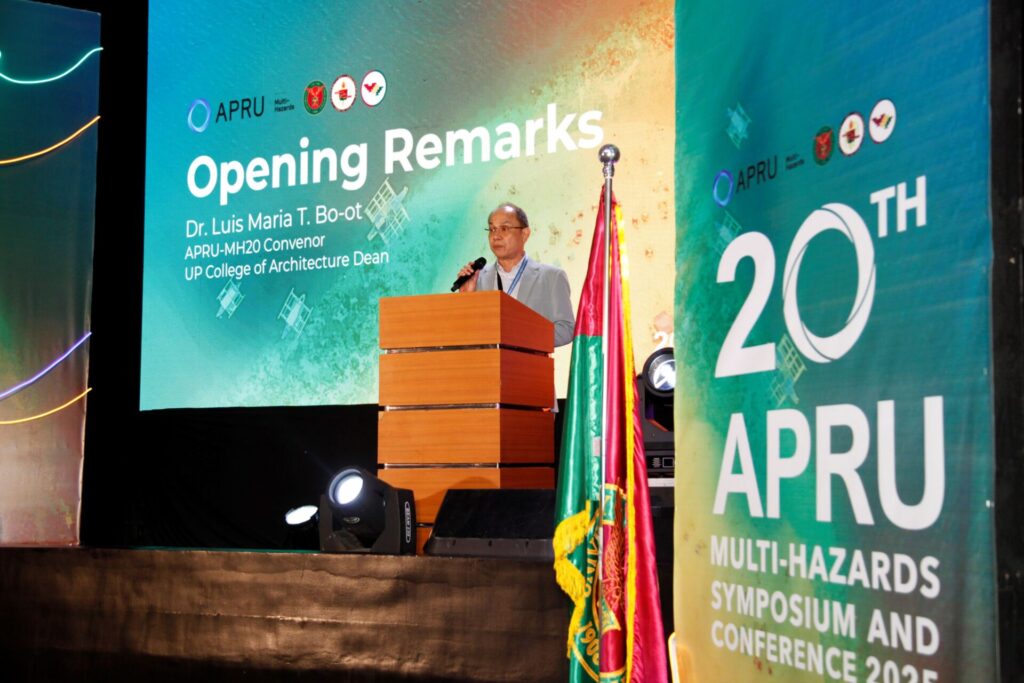
UP College of Architecture Dean Luis Maria T. Bo-ot
The symposium also provided a venue for gathering local practitioners in the Philippines. A pre-conference Resilience Advocacy Day was held on November 26, led by Filipino architects and allied professionals, and brought together professional associations, advocacy groups, and academic partners to discuss rights of nature, plastic pollution, sustainable mobility, and informal settlements in the context of urban resilience. The professionals concluded with a Manifesto on Resilience and Shared Volatile Realities, led by the APRU-MH20 Program Committee Lead Leonido Gines Jr.
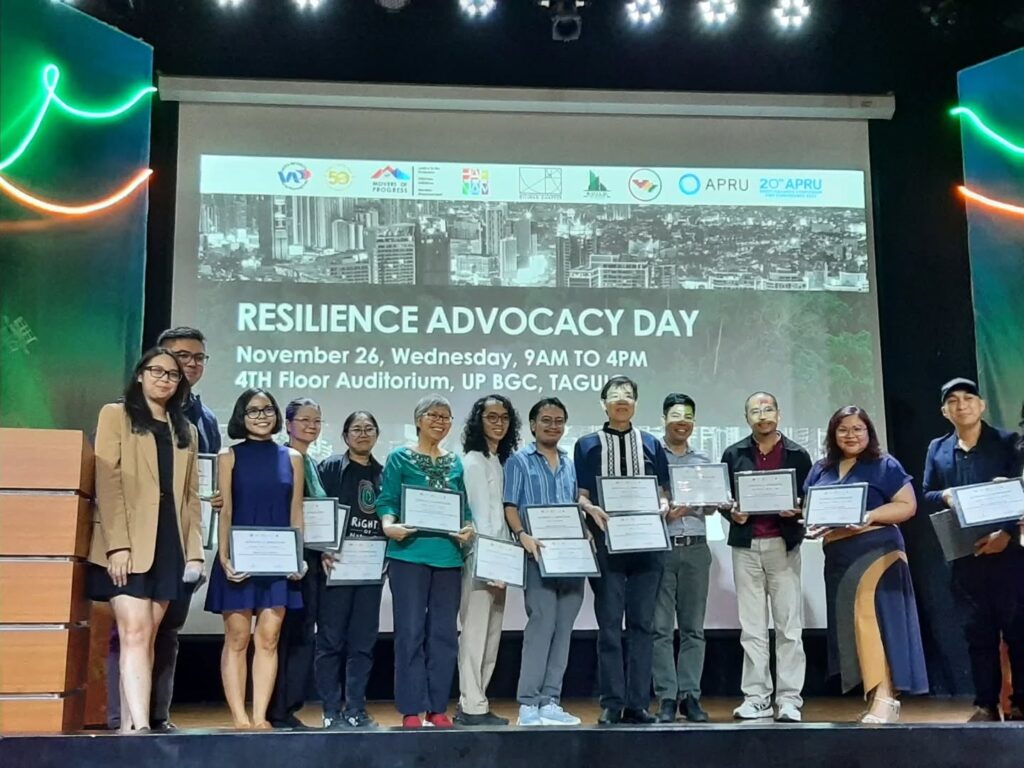
Pre-conference Resilience Advocacy Day
On the last day, participants joined a field tour of urban flood mitigation systems in BGC, followed by a visit to the UP Diliman Resilience Institute. Executive Director Prof. Alfredo Mahar Francisco Lagmay, together with a group of scientists, presented how innovative technologies and management approaches were integrated in the disaster risk reduction practices in the country, particularly through science-based information and tools developed by the Nationwide Operational Assessment of Hazards (NOAH) Center.
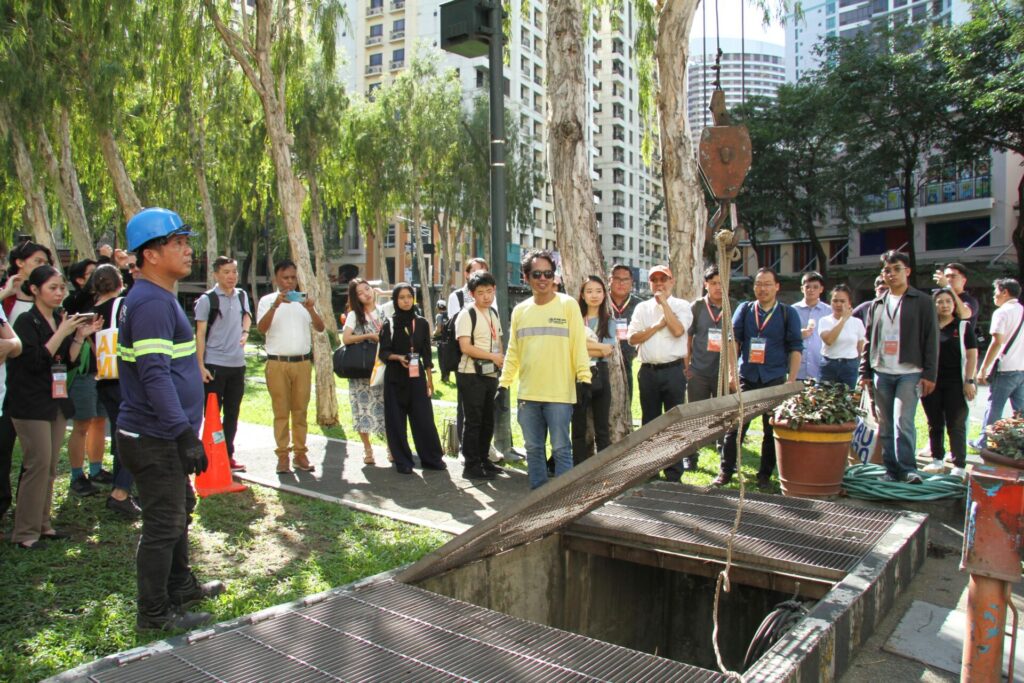
Visiting urban flood mitigation systems in BGC
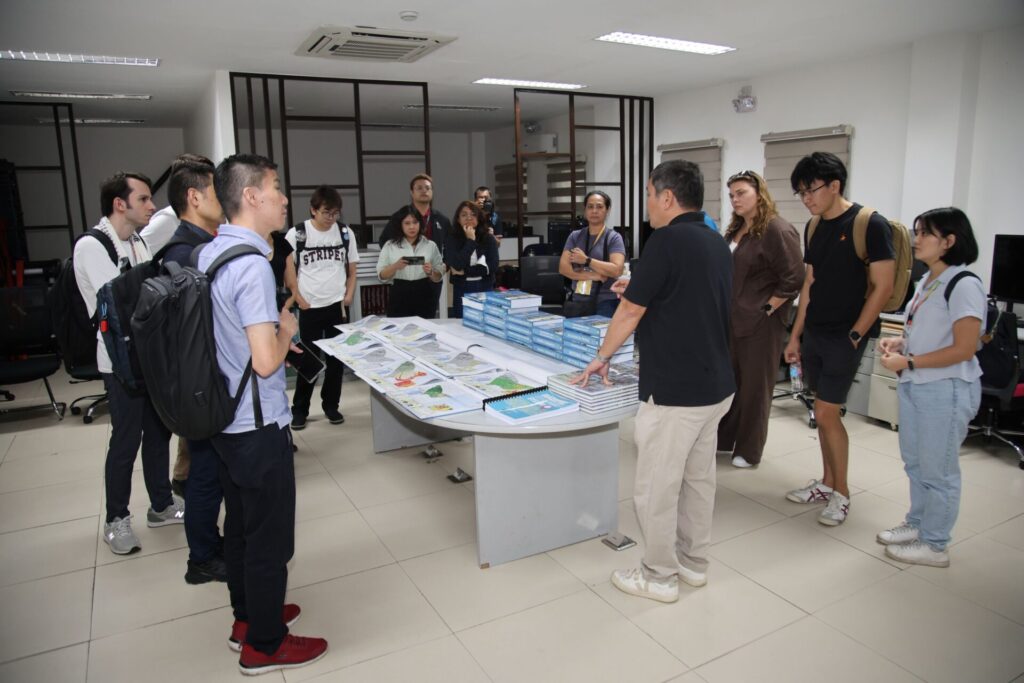
Visiting UP Diliman Resilience Institute