
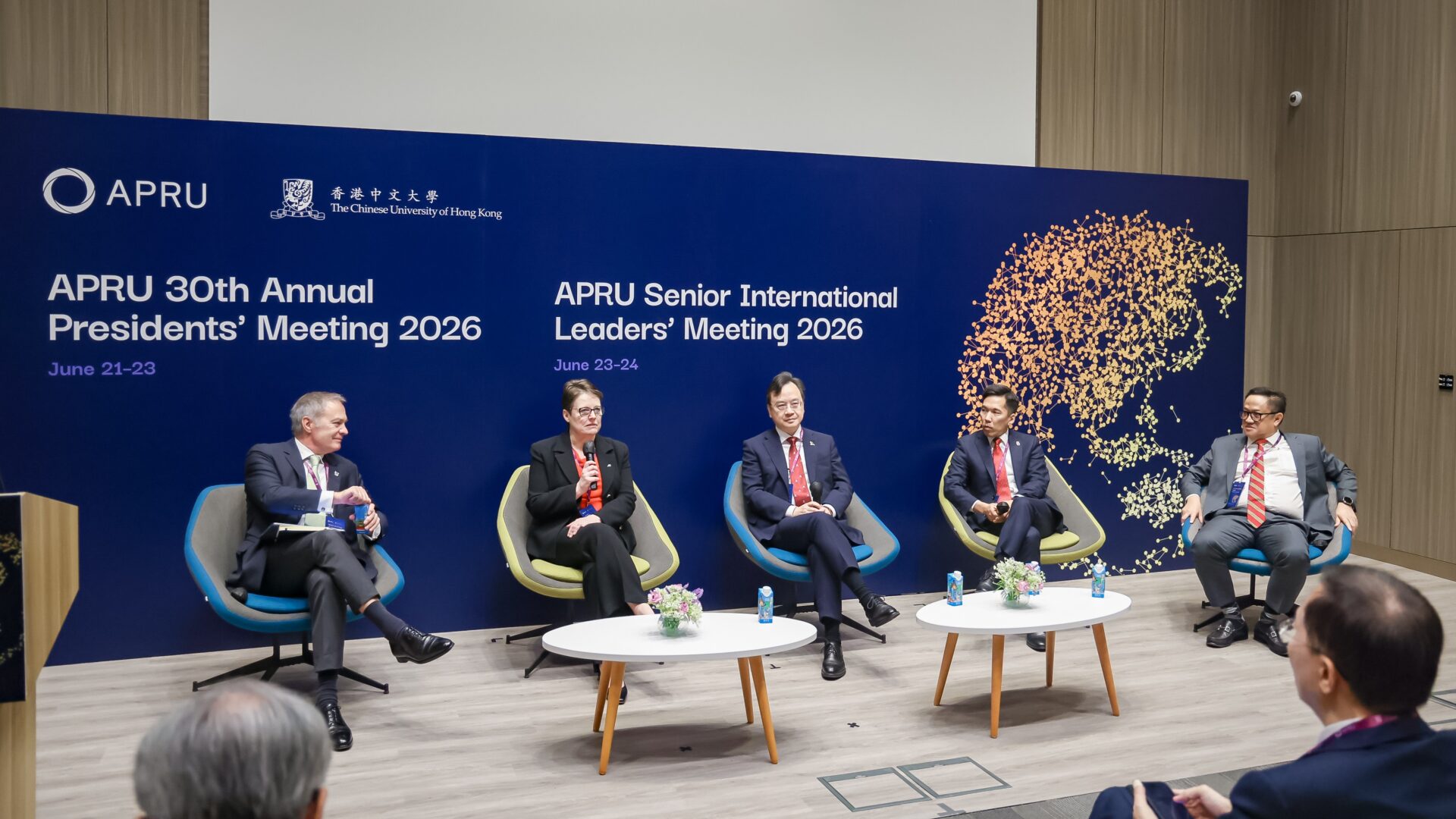
Almost four years after ChatGPT upended many of the assumptions about the university’s ecosphere, more than 150 attendees from 45 universities representing 19 economies on all sides of the Asia Pacific Rim gathered in Hong Kong from 21 to 23 June to hear how universities have adapted to generative AI over the past 43 months and to share plans for the future.
With some exceptions, at the Annual President’s Meeting (2025) of the Association of Pacific Rim Universities (APRU), the attendees heard how professors were working AI into the curriculum and how AI was altering the students’ work environment.
One telling example of the latter was told by Joy Johnson, president of Simon Fraser University (SFU), Vancouver, Canada, who told the meeting how a professor in SFU’s business faculty has fully embraced AI’s claim for increased efficiency: she insists that her students use AI and “gives them three times as many assignments as they used to have”.
In his remarks at the opening of the conference, APRU’s interim chair, Teck Hua Ho, president of Nanyang Technological University (Singapore) gave an example of how generative AI speeds up research. Asked by a university stakeholder whether, because of the geopolitical tensions, he had looked into recruiting talent from this or that country, he used AI, which brought him to Elsevier’s Researcher of the Future Global Survey (2025).
| This article is part of a series on Pacific Rim higher education and research issues published by University World News and supported by the Association of Pacific Rim Universities. University World News is solely responsible for the editorial content. |
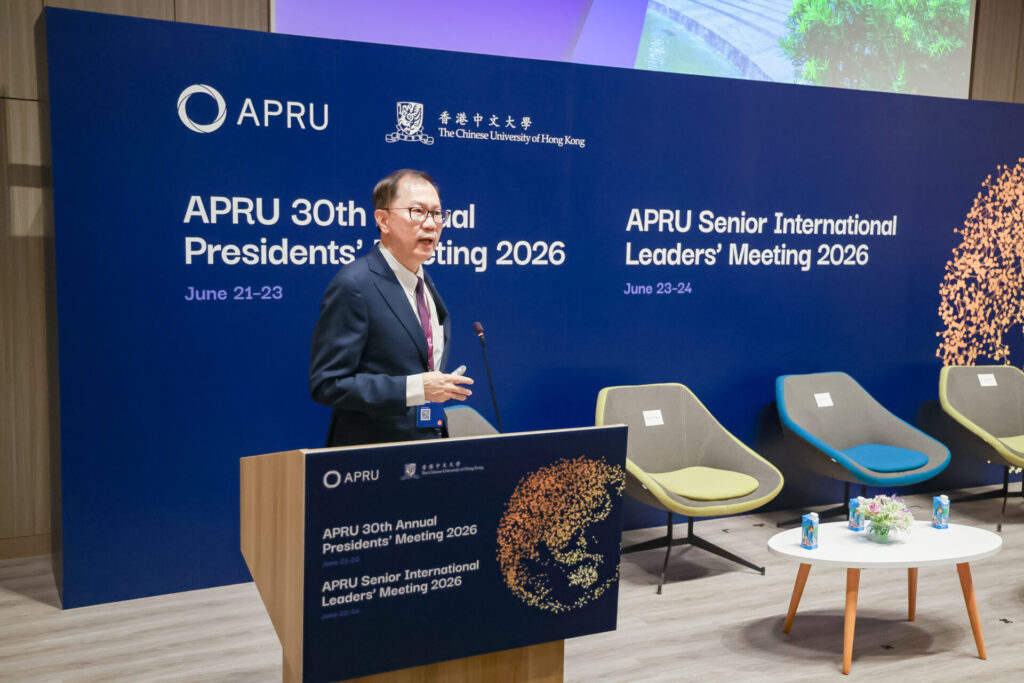
The survey of 3,200 researchers worldwide, Ho told his fellow presidents, found that in the United States in 2022, “24% of people were thinking of leaving [the US], but now it’s gone [up] to 40%.”
By contrast, “in China it used to be 35% of people were thinking of leaving to go to a better university in the US or UK and now [it’s] down to 13%”. In Japan, 24% of scholars surveyed wanted to leave the country, now that figure is down to 5%, “probably because Japanese food is getting better,” he quipped.
These figures and the amount of financial support available, are, Ho explained, key data points in what he calls “the new pattern of global talent mobility and AI disruption”.
Professor Dennis Lo, vice-chancellor and president of the Chinese University of Hong Kong (CHUK), suggested that both his university, with a distinctive mission to “bring together China and the West”, and Hong Kong, as an international education hub committed to innovation and technology, were an ideal location for the conversations ahead.
Pointing to international programmes in biodiversity and sustainability, as well as virtual student exchange programmes, Lo emphasised how APRU has “strengthened partnerships with member institutions and expanded opportunities for its faculty and students to work across borders on issues of shared concern”.
Different economic, cultural, geo-tectonic realities
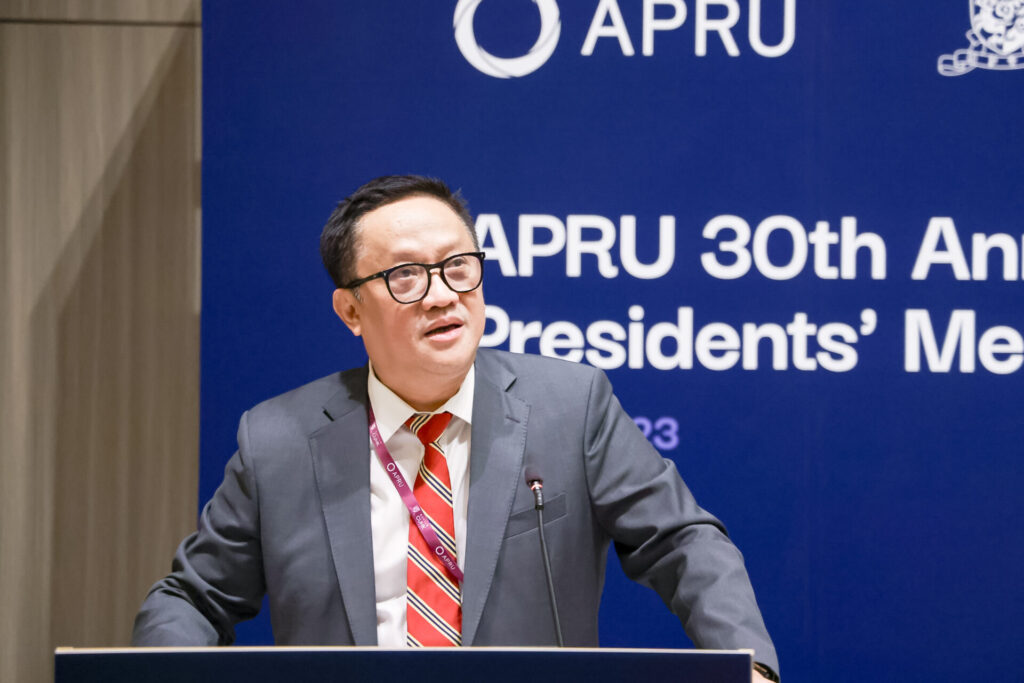
In his keynote address, “From Resilience to Renewal: Universities in the Age of Polycrisis”, Angelo Jimenez, president of the University of the Philippines (UP, Manila), addressed questions of how universities can remain “relevant, trusted and publicly meaningful in the decades ahead” by drawing a stark contrast between his university and country and the other attendees’ countries and institutions.
Though they share a commitment to higher education, they come from “very different realities in all aspects, economic, cultural, geographical [and] tectonic”, he said, referencing the fact that the Philippines experiences more than 1,400 earthquakes annually.
For the past four years the Philippines had been Number One in the United Nations’ World Risk Index.
“So,” he said, “my reflection this morning arises from a context in which change is not an abstract process but a lived condition.”
Filipino tribal mythology, explained Jimenez, who is from an indigenous Mindanao tribe, offers an epistemological structure for coping with the polycrisis: for example, a flood leads to agricultural collapse, which leads to financial ruin, which leads to migration, which weakens the government’s capacity to manage the crisis.
The story of Manama, the creation story of the peoples of Mindanao, is nothing like the Biblical story of creation. Manama did not create an Eden watched over by a benevolent deity; indeed, he leaves the barren Earth and life comes from another “planet where soil exists in full richness. From that place, bees and wasps carry soil on their bodies into the barren land, and wherever it drops, life begins anyway, because something is brought into it from elsewhere”.
In this ontological situation, life exists “under conditions of uncertainty, interruption and fragility,” he said. The myth “eschews the utopian dream of complete restoration.
In its place is the recognition that they must “restore and renew the conditions that enable life to flourish, despite uncertainty … It is the deliberate work of rebuilding capacities, relationships, institutions and environments, so that societies can move forward under new conditions.”
This is not “resilience” as it is used by international reports and most universities, because the term “can become problematic when it merely asks people and institutions to endure conditions that should be transformed.”
The myth teaches that “genuine repair is not achieved merely by returning to a previous condition [of, for example, indigeneity] but by building the relationships, capacities and structures that make life, that make collective flourishing possible. . . . It provides a lens through which seemingly diverse initiatives, whether in resilience, sustainability, indigenous knowledge, community engagement or lifelong learning can be understood as part of a shared commitment to renewal” but not stability.
Towards this end of his address, Jimenez told of how UP has put itself at the service of anticipating and not simply reacting to these crises. And, while he did not mention AI specifically, UP’s Energy Resilience and Crisis Response Network and the Nationwide Operational Assessment of Hazards, clearly rely on computing power – united with indigenous knowledge. Both initiatives were taken up by UP after the government cut their funding.
By way of example, he pointed to the hazard maps that UP has produced and have been adopted by 60% of our 1,600 local governments. They have “reduced the average death toll in the country from 1,250 to just 250 a year,” he said.
Warnings about AI use
Perhaps not surprisingly, given that the APRU conference was held just weeks after Pope Leo XIV’s encyclical warning against the dangers of AI, the university presidents candidly voiced their concerns about how AI could have a deleterious impact on students and deep learning.
In an interview, Johnson told University World News about her concern that students could use AI “as a shortcut and not necessarily put in the intellectual work they need to put in order to master the material”.
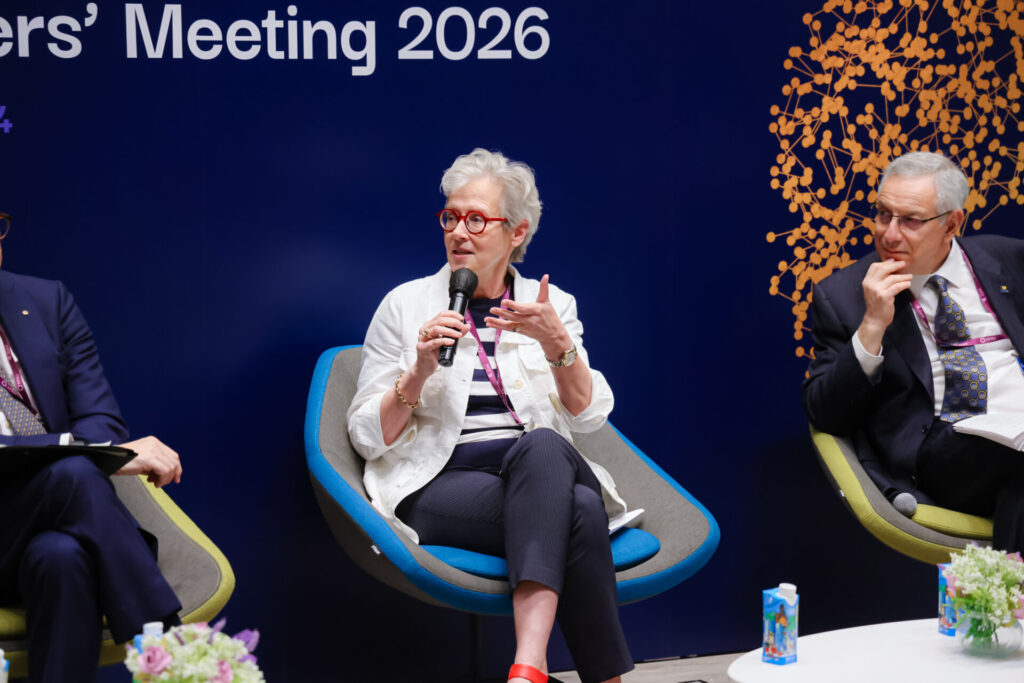
As have professors at other universities, some at SFU have brought back in-class assignments to support academic integrity.
Jimenez believes that at least in some measure the divorce between knowledge and members of the academy has already occurred. A graduate school professor told him that not only did students come to class having not done the readings – but that when he admonished them one student indicated that doing readings for class was passé.
“Professor, this is the digital age; the only thing we need to do is learn how to find an answer to any question at the time when we need to answer it,” the student told him.
“For me,” continued Jimenez poetically, “there’s very profound meaning there, because there was a time, maybe most all of us here, went through education before AI, when we had to really study, to burn the midnight oil, until the process, the rigour, the discipline of the academia would transform how we think, and knowledge became us. We are knowledge; it’s part of us.”
Now, however, “there is alienation from the learner and to the knowledge, and the knowledge is separated from it and it’s a bit objectified to be used when needed, and to be wrapped when all of you are needed.”
The President of the University of Southern California (USC), Beong-Soo Kim, set his comments about the responsible use of AI in the larger context of how social media forms ideological bubbles, silos, that, he says, has lessened the “quality of empathy”.
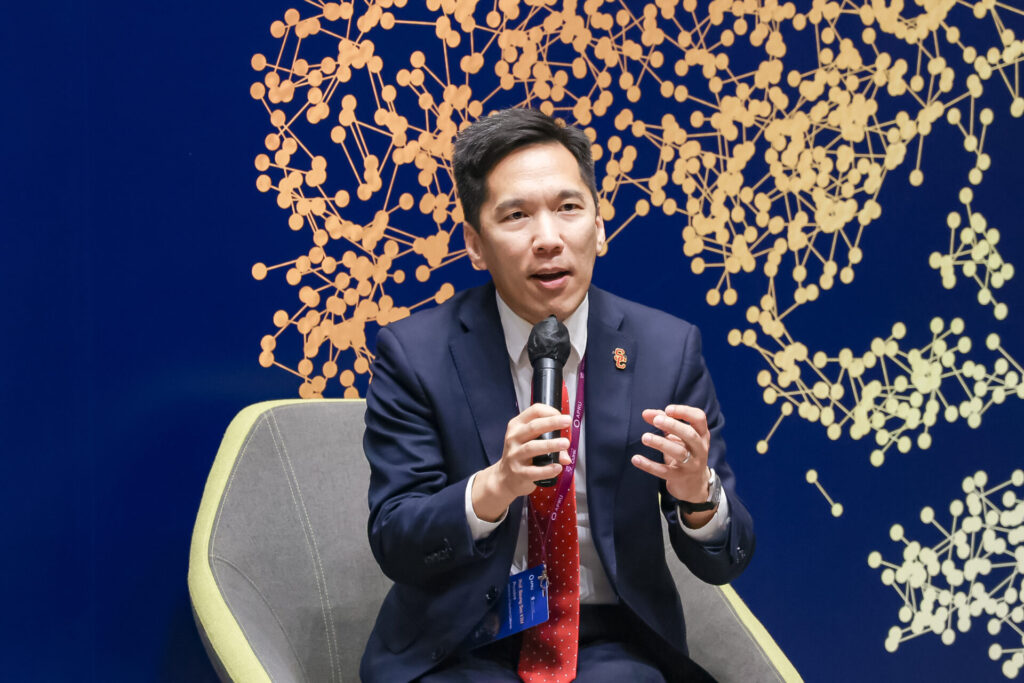
“When I talk about empathy, I’m not just talking about the ability to put yourself in someone else’s shoes, but the desire to actually put yourself into someone else’s context and background and try to understand where they’re coming from.
“It’s a human kind of impulse that I think nowadays, at this moment of polycrisis, has actually never been more threatened, more threatened by fragmentation and siloing in so many dimensions of our social existence.
“Politically we’re in completely different ideological bubbles. Social media has created structures where we can only talk to people that already agree with us.”
One professor at USC’s business school has tackled this problem Kim identifies by banning laptops from his class – including for note-taking during conversations.
“It’s a small class and what he’s trying to promote, to teach these students – who, by the way, have gone through COVID-19 several years ago, and who are still experiencing some of those after effects – is the art of people actually looking at each other and listening to each other and trying to respond to each other in real time, as opposed to the distraction of writing down what someone has just said,” said Kim.
Johnson challenged her fellow APRU members to consider another implication of AI: its impact on the climate crisis. Both the electricity needed to run AI server farms and the water needed to cool the servers lead to the question: How are we going to balance our support for AI and our interest in sustainable development?
SFU, she told the meeting, hosts the largest supercomputer in Canada (which is run in conjunction with Queen’s University (Kingston, Ontario). There is, however, a backlash in North America among both students and the public about building server farms.
“I think that as we think about the responsible use of AI, we need to think about and embrace it on one hand, but we also need to think about the risks associated with the use of AI,” says Johnson.
Preserving scientific wonder
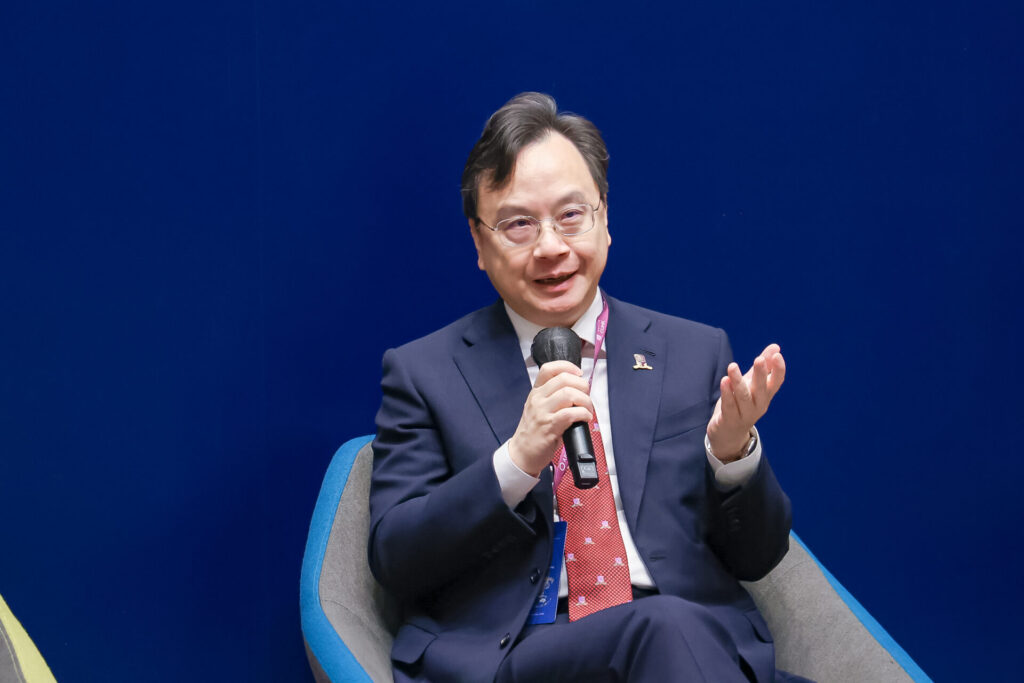
While Lo did not push back against the optimism about AI expressed by many speakers, recalling his own days in the laboratory as a molecular biologist, Lo wondered whether the “romanticism” of science was being lost in a research paradigm built around AI.
Science students, he said: “love to hear interesting stories of inspiration”, including the familiar story that Sir Isaac Newton conceived of the laws of gravity after an apple fell from a tree and hit him on the head.
“I was a little bit worried about what the future would be like,” said Lo, who described himself as a clinician-scientist whose work is deeply data-driven.
“When we put all the data into the computer and then the computer generates ten hypotheses, we then select three to test; in the end hypothesis two is correct. It seems to me to take away the romanticism of science.”
Further, and perhaps more relevant to the question of authenticity in the scientific method: “If a scientist has to be very honest, then I wonder whether he or she can claim ownership of that hypothesis?”
A theme throughout the APRU presidents’ presentations, questions and responses was the question of what several called “holistic education”, by which they meant that every university student needs to be grounded in the humanities.
In a panel discussion, Nicola Phillips, vice-chancellor and president of Adelaide University (from the merger in 2024 of the University of Adelaide and the University of South Australia), responded to the question, “What kind of graduates do we need? How are educational models evolving in your institutions to cope with these new necessities, and how can we, as universities, co-design learning ecosystems together?”
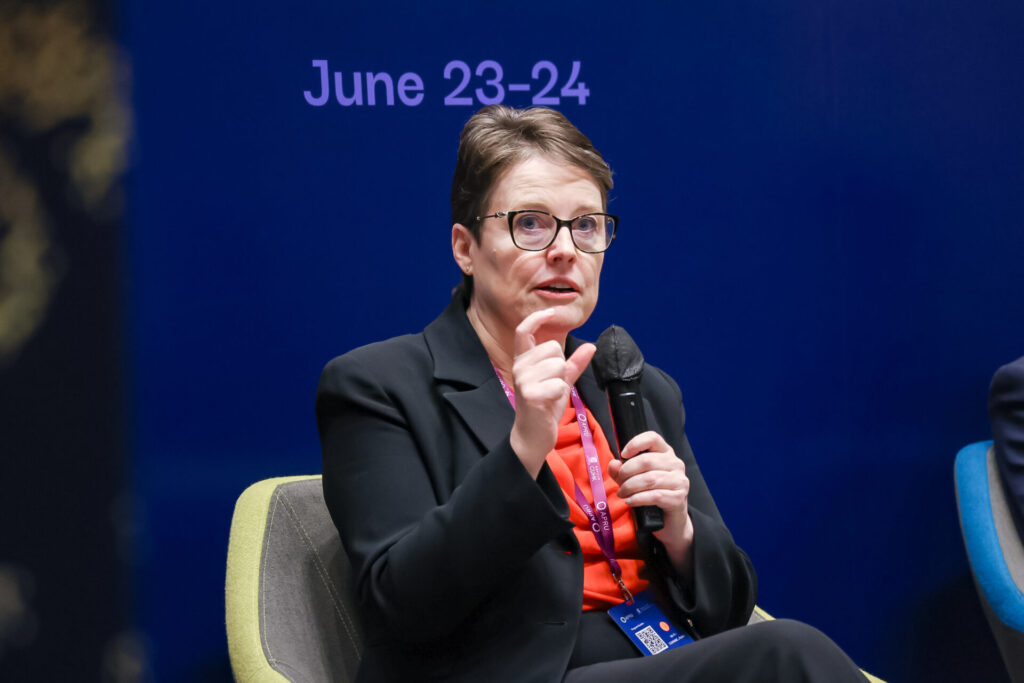
She said: “As important as skills and training are, the core questions beyond that are about how human beings are going to think about themselves and their interactions with each other in a world that’s dominated by such rapid technological change.
Humanities’ value under-recognised
“I raised this because in Australia and many other places around the world, the humanities are under really significant pressure, and I don’t mean to make an argument that the humanities should be privileged over STEM. Clearly not. That would be a ridiculous thing to say. But, simply, that their value is under-recognised at the moment, and the squeeze on the humanities is so much greater than it ever has been.”
She said that is what is being played out through funding models and in a range of other ways around the world. “And I think we really do have to re-emphasise the value of the humanities, the social sciences, the arts, not simply as add-ons to STEM but as disciplines which contribute to the kind of broad holistic education that we need to be giving to all of our students.”
The humanities are, she said, key to developing students’ “cultural intelligence”.
In the Australian context, that’s particularly about encountering First Nations knowledge, experience and so on, she says.
“But more generally, university education is very often the first point at which young people are encountering people with very different backgrounds from themselves, from different parts of the world, different ways of seeing the world, different ways of being in the world, and if we start to lose that diversity within the university, we are really in danger,” she said.
“And it goes to the point as well about knowledge and cultural intelligence not simply residing within the walls of the university and the interactions we have but also in making sure that our students are working in their communities and starting to encounter perspectives, people that they have not otherwise been exposed to,” Phillips said.
At the end of our interview, Johnson spoke about the danger of university education being deconstructed so that bits and pieces of curriculum are taught only as corporations need employees to be “upskilled”.
“I think it’s a mistake for universities and, actually, our government, which is always developing plans, looking at gaps and where and how to fill them. That’s a bit of a mug’s game,” she said. “It’s very hard to anticipate what is going to be needed in the future.”
Her view is that a good undergraduate education that “teaches you how to read literature, think critically, manage yourself in a discussion, be independent and a problem solver, that’s what’s going to set you up for success in any area.”
By way of example, she pointed to the outgoing chancellor of SFU, Tamara Vrooman. “Her degree was in history, and she went on to become Deputy Minister of Finance in British Columbia and ran VanCity [a network of credit unions] and is now the CEO of the Airport Authority.
“She will tell you that her history education is what put her in a good stead for her career,” Johnson told University World News.