
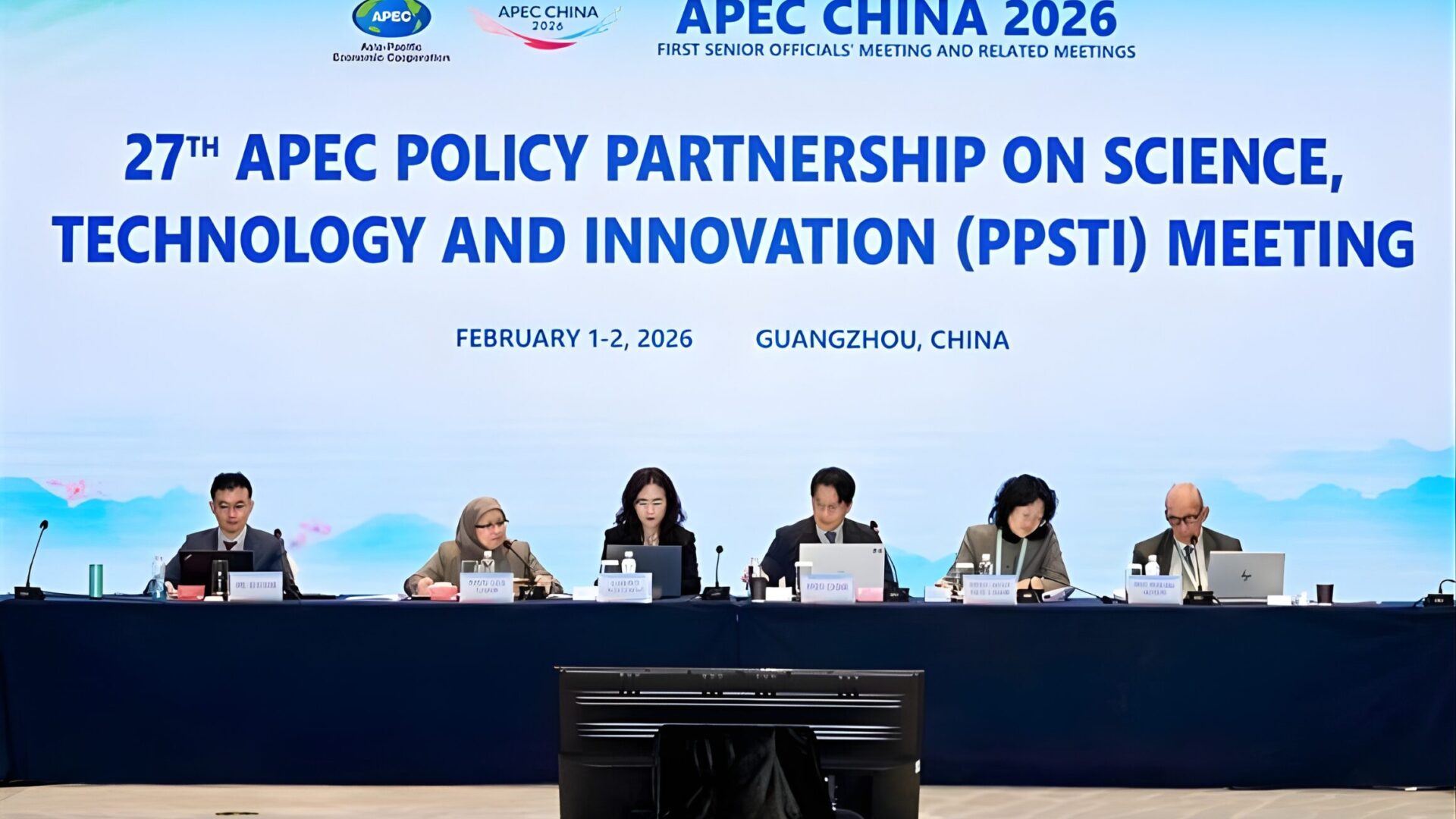
On February 1, the Association of Pacific Rim Universities (APRU) contributed academic perspectives to the 27th meeting of the APEC Policy Partnership on Science, Technology and Innovation (PPSTI), held at the Guangzhou Baiyun International Conference Center. As a guest member of PPSTI, APRU continues to advance inclusive, ethical, and innovation-driven development for social impact across the Asia-Pacific.
Represented by Ms Joey Chu, Senior Manager of Events at APRU, APRU’s intervention drew on outcomes from the APEC University Leaders’ Forum (AULF) 2025, which convened nearly 100 participants from 13 economies to examine AI’s impact on education, workforce readiness, and digital equity. The presentation underscored that the region’s greatest challenge is access, not technology—with 2.5 billion people still offline and 43% of students lacking home internet in APEC.
APRU’s Key Messages
- Connectivity as a Foundation: AI adoption must be built on closing infrastructure gaps. Without universal access, digital transformation risks deepening divides.
- Equity by Design: APRU highlighted the risks of bias and exclusion in AI systems, stressing that equity must be embedded from the start to protect vulnerable groups such as women, youth, SMEs, and rural communities.
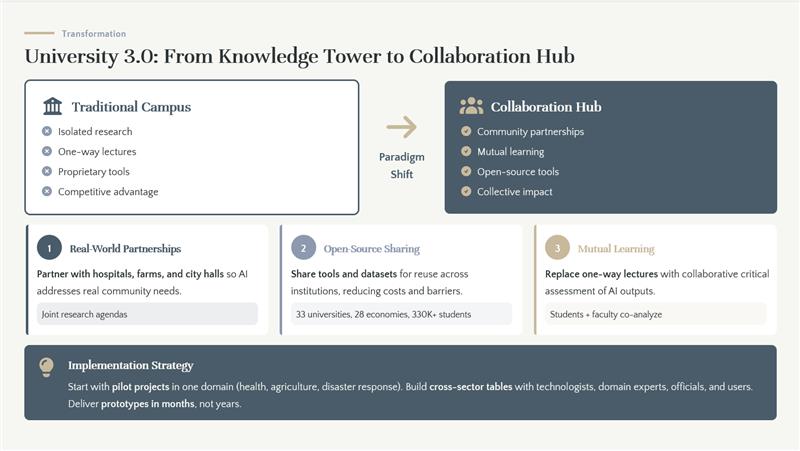
- Universities as Collaboration Hubs: APRU called for a paradigm shift in higher education—from isolated “knowledge towers” to collaboration hubs that partner with hospitals, farms, and city halls to co-develop AI solutions for real-world needs.
Alignment with PPSTI Priorities
These insights directly supported PPSTI’s 2026 theme of “Fostering an Open and Collaborative Innovation Ecosystem for Resilient Growth in the Asia-Pacific.” Economies at the meeting pressed for deeper policy coordination and practical cooperation on science, technology, and innovation as frontier technologies reshape growth. Vice Minister Chen Jiachang of China highlighted that “frontier technologies, especially AI, are developing rapidly, opening up new possibilities for human society,” while PPSTI Chair Dr Hwanil Park stressed the need for clear policy direction and measurable outcomes.
APRU’s intervention complemented these calls by showcasing how inclusive AI adoption requires integrated strategies across infrastructure, education, and governance. Hazami Habib, Vice Chair of PPSTI, reinforced the importance of openness and collaboration, noting that “fostering an open innovation ecosystem is not merely about technology transfer; it is about building strong partnerships between governments, the private sector, academia and civil society.
Looking Ahead
APRU reaffirmed its commitment to supporting PPSTI’s mission by aligning research, policy, and practice to build a resilient, AI-ready workforce and innovation ecosystem. This collaboration underscores the region’s shared vision: ensuring that technological transformation drives inclusive growth and sustainable development for all. APRU will continue this dialogue at the APEC University Leaders’ Forum 2026, co-hosted with Tsinghua University in Shenzhen this November, advancing the region’s shared vision of technological transformation that drives inclusive growth and sustainable development for all.
About APEC University Leaders’ Forum: https://www.apru.org/programs/our_work_category/apec-university-leaders-forum/