Photos: GSI, APRU
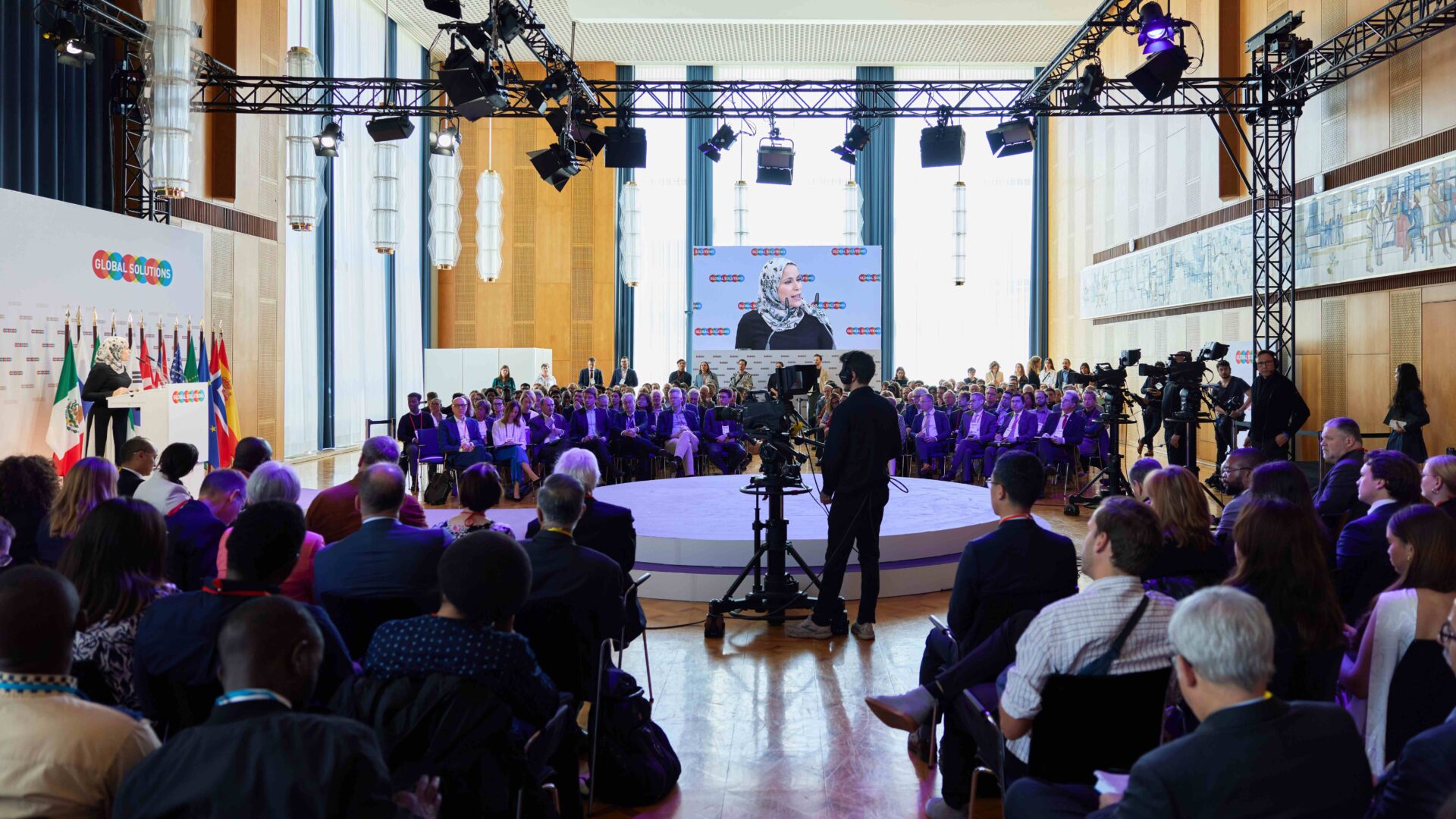
On May 5–6, 2025, Christina Schönleber, Chief Strategy Officer of APRU, and Program Manager Benjamin Zhou represented the Association of Pacific Rim Universities (APRU) at the Global Solutions Summit 2025 in Berlin, Germany. Hosted by the Global Solutions Initiative (GSI) at the European School of Management and Technology (ESMT), the summit convened over 1,000 participants both in person and online under the theme “Bridging Divides: New Pathways for Global Prosperity.”
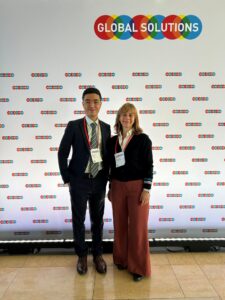
APRU Chief Strategy Officer Christina Schönleber (r) and Program Manager Benjamin Zhou (l) at the Global Solutions Summit
The summit featured more than 150 speakers, including representatives from the EU, OECD, UNESCO, G20, and G7. A powerful keynote by Alaa Murabit, former UN High Commissioner, set the tone by emphasizing the importance of institutional trust and the risks posed by its erosion.
Key discussions revolved around artificial intelligence, multilateralism, and climate action, with dynamic exchanges highlighting the urgency of global cooperation.

Christina Schönleber participated in a closed-door workshop on next-generation AI, organized by the Centre for International Governance Innovation (CIGI). The session explored inclusive data agency, AI capacity building, and digital infrastructure development, offering valuable insights for APRU’s strategic initiatives.
APRU’s collaboration with GSI began in 2024. In May this year, GSI’s Global Solutions Journal published an article by APRU’s Forest Ecosystems Living Lab Initiative (FELLI), showcasing its innovative approach to forest research and community engagement across six Pacific Rim economies.
Benjamin Zhou’s participation was supported by Blaues Haus Stiftung, a Hannover-based foundation promoting cultural exchange. Following the summit, from May 7 to 14, Zhou engaged with German U15 and TU9 university alliances to exchange best practices in academic collaboration. He also attended the University: Future Festival, Germany’s largest event on the digital future of education, and met with the Centre for Higher Education (CHE), a leading think tank in the sector.