
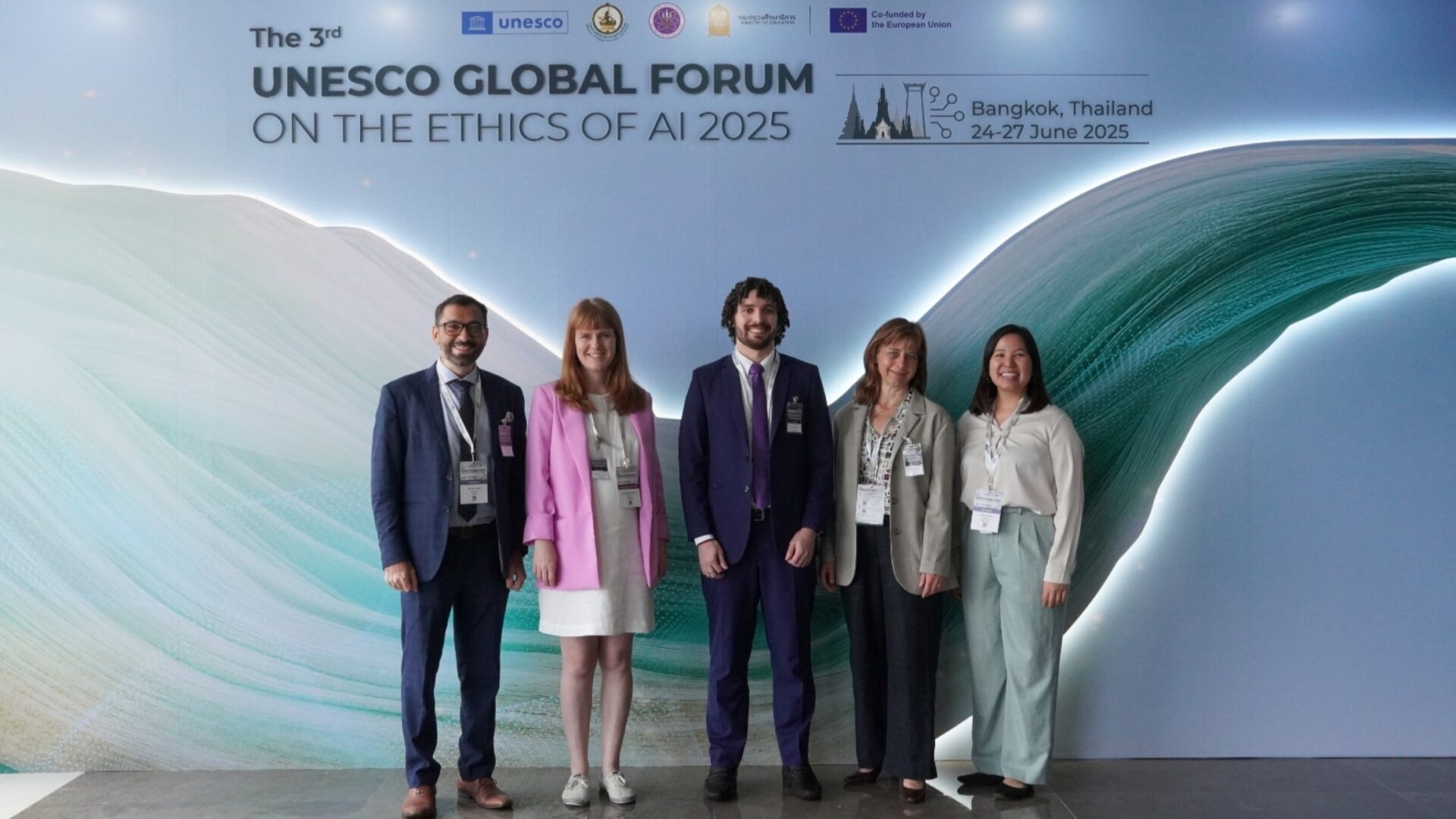
Held on June 24, 2025, in Bangkok, this official side event of the 3rd UNESCO Global Forum on the Ethics of AI brought together over 65 participants from across continents to explore inclusive, ethical, and scalable approaches to AI workforce development.
Co-hosted by the Association of Pacific Rim Universities (APRU), the United Nations Economic and Social Commission for Asia and the Pacific (UNESCAP), and Data.org, the session built on years of collaborative efforts to strengthen regional capabilities and promote responsible AI integration. It marked a significant milestone in ongoing initiatives to foster regional collaboration around AI for Good and Data Science for Social Impact (DS4SI).
A Format Designed for Engagement and Impact
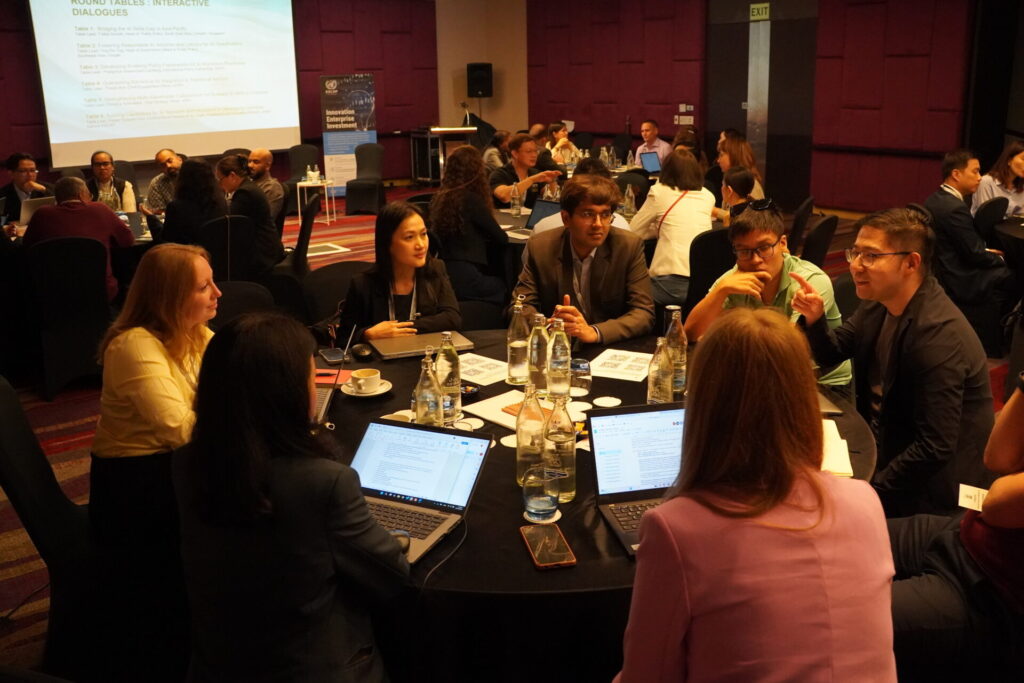
Structured to foster deep engagement and cross-sectoral dialogue, the event opened with a panel featuring representatives from government, academia, and industry. These experts shared insights and case studies on inclusive AI workforce strategies, laying a rich foundation for the second—and most interactive—segment: six facilitated roundtable discussions.
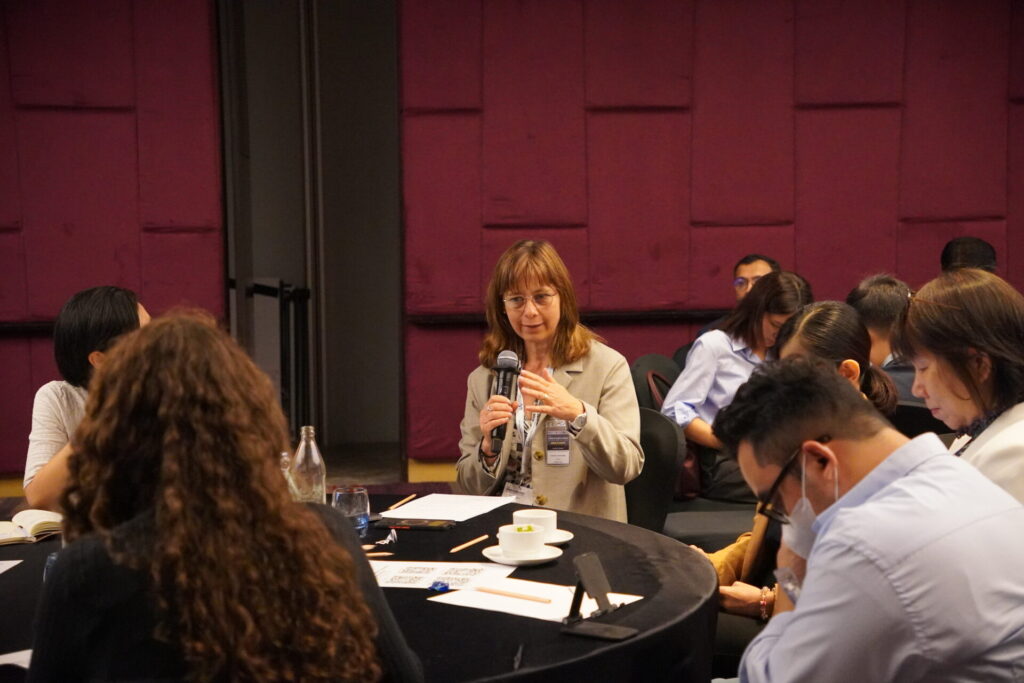
These roundtables were the heart of the session, offering a dynamic and inclusive space where all participants could engage meaningfully. Organized around six priority themes—including bridging AI skills gaps, responsible AI literacy for all, enabling policy frameworks, supporting traditional sectors, and strengthening multi-stakeholder collaboration—the discussions enabled participants to share local challenges, co-create solutions, and identify partnership opportunities. The format was widely praised for its depth, inclusivity, and practical orientation, transforming the event into a collaborative space for experimentation, trust-building, and innovation.
Reflecting on the event, Christina Schönleber, Chief Strategy Officer at APRU remarked: “This session exemplified what’s possible when diverse stakeholders come together in a spirit of collaboration. By creating safe spaces for dialogue and experimentation, we can ensure AI solutions are not only innovative, but also equitable, context-aware, and scalable across diverse communities in Asia and the Pacific.”
Key Insights from the Panel and Roundtable Discussions
The session surfaced a comprehensive set of insights that will guide future efforts toward building an AI-ready workforce:
1. Workforce Resilience Requires Broad-Based AI Literacy and Targeted Support
AI is accelerating job disruption through both automation and role transformation. Existing roles have already experienced a 40% shift in required skills, with projections reaching 70% by 2030. Continuous upskilling and adaptive, sector-specific policies are therefore essential to strengthen workforce resilience. Targeted support is particularly critical for SMEs, which face persistent barriers such as limited budgets, low digital readiness, and a lack of localized tools. Solutions must include affordable platforms, tailored training, and incentives to enable responsible AI adoption. Women and youth, who are disproportionately represented in roles at risk of disruption, also require focused interventions, including retraining incentives and dedicated support mechanisms.
2. Inclusive, Locally Relevant AI Education Is Key to Addressing Systemic Disparities
The digital divide spans infrastructure and human capital, especially between urban and rural areas. This reflects broader development gaps, not just AI literacy. Programs must embed demographic, linguistic, and cultural diversity, empower local champions, and involve communities in co-creating solutions. Local ownership is key to sustainable adoption.
3. Trust Is the Essential Foundation for Responsible AI Adoption
Trust in AI systems is essential, as people are more likely to adopt technologies they understand and consider safe. This requires transparent and ethical model design, strong data privacy protection, and the use of high-quality, representative datasets. Policy frameworks must reinforce trust by combining enforceable regulations with adaptable ethical guidelines that reflect both global standards and local realities.
4. AI Learning Pathways Must Foster Lifelong Adaptability and Ethical Adoption
AI education must be inclusive, interdisciplinary, and attuned to local contexts. It should prioritize real-world, impact-driven learning that cultivates adaptability, creativity, ethical awareness, and the capacity for lifelong learning. A layered approach is essential—combining foundational literacy and ethics for all with targeted skills development. Training should reflect local languages, cultures, and sectoral needs, incorporating ethics, critical thinking, domain-specific knowledge, and sector-specific definitions of AI literacy. A shift toward applied, impact-driven learning is critical to prepare learners for real-world challenges.
5. Strategic Partnerships Are Critical to Incubate and Scale Inclusive Innovation
Effective AI workforce development requires innovation enabled by coordinated collaboration between governments (policy and funding), academia (research and training), and industry (expertise and tools) to co-create and scale solutions. These partnerships must be grounded in shared accountability and long-term commitment. Governments must foster enabling environments for innovation, invest in research ecosystems—particularly in the Global South—and promote open data to support the development of open-source tools and bold, equity-driven solutions. Sustainable AI adoption depends on local ownership, with communities leading the design and implementation of solutions.
Voices from the Forum
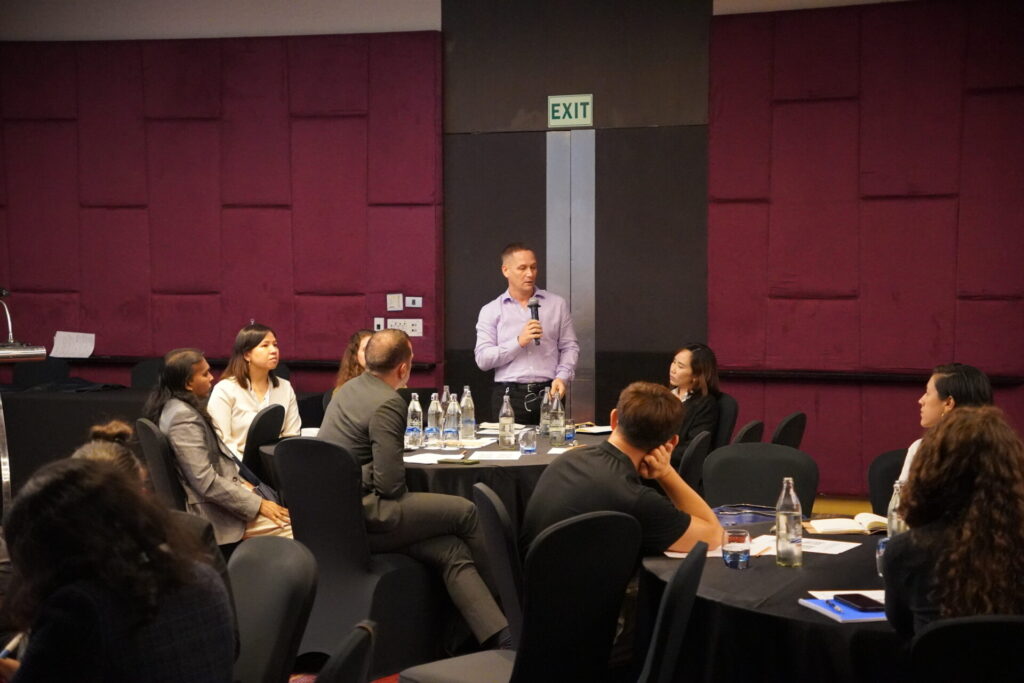
Professor Ekapol Chuangsuwanich, Deputy Director of the Artificial Intelligence Centre at Chulalongkorn University, emphasized the importance of sector-specific AI literacy and empowering educators as local champions.
Ying Hui Tng, Head of Government Affairs & Public Policy for Southeast Asia at Google, highlighted the AI Opportunity Fund as a model for supporting marginalized communities and fostering inclusive innovation.
A Commitment to Inclusive AI Futures
As AI continues to reshape the future of work, events like this play a vital role in aligning global efforts with local realities. The insights and partnerships formed here will feed into broader regional initiatives and help build a future-ready, inclusive AI workforce across Asia and the Pacific.
About APRU’s work on Artificial Intelligence
Over the years, APRU, UNESCAP and Google have collaborated to advance responsible AI integration and regional capacity building through policy dialogues, research, and multi-stakeholder engagement.
In parallel, APRU’s partnership with Data.org—supported by Mastercard—has focused on strengthening regional capabilities through inclusive education, open-source training, and the development of a purpose-driven data science workforce. Their joint initiative, the Social Impact Data Science Accelerator (SIDSA), exemplifies this commitment by offering practice-based learning opportunities to students, educators, and social impact organizations across Southeast Asia.
For more details about the event see the official event summary report:
- Enabling and AI-ready Workforce: Exchanging Policy Perspectives and Solutions
- The University World News Article: AI Education Needs Multidimensional Approach to be Equitable
The official web pages: