
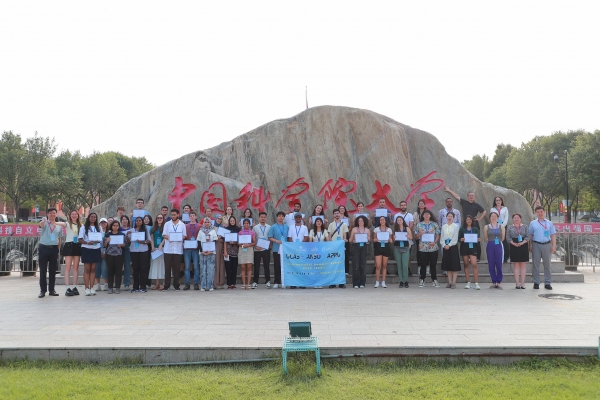
The 2025 UCAS-ANSO-APRU International Summer School was a vibrant convergence of global minds, united by a shared commitment to scientific exploration and sustainability. Hosted by the University of Chinese Academy of Sciences (UCAS), in collaboration with ANSO and APRU, this two-week program welcomed over 50 outstanding students from 37 universities across 25 countries and regions—including APRU member institutions—making it a truly international academic endeavor.
Under the theme “Earth Sciences for a Shared Future,” participants engaged in cutting-edge lectures, hands-on fieldwork, and cultural immersion activities that bridged disciplines and borders. From exploring climate change and geological hazards to experiencing traditional Chinese tea culture, the program offered a holistic journey through science, society, and sustainability.
The summer school featured:
- Online courses led by 23 renowned scholars on topics like plate tectonics, river restoration, and ecosystem feedback.
- Doctoral forums showcasing student research and fostering peer-to-peer collaboration.
- Field investigations across premier CAS institutes, including the Tibetan Plateau and Weihe Basin.
- Cultural exchanges that deepened cross-cultural understanding and global friendships.
This immersive experience not only advanced participants’ academic and practical skills but also cultivated a global network of young leaders ready to tackle the planet’s most pressing challenges.
On behalf of the teaching faculty, Associate Professor Han Yinghui from the College of Resources and Environment at UCAS, Associate Researcher Zhang Junya from the Research Center for Eco-Environmental Sciences at CAS, and Dr. Hu Yanzi from the Institute of Geographic Sciences and Natural Resources Research at CAS delivered summary speeches at the closing ceremony.
Professor Zhou Yuanze, Deputy Dean, UCAS encouraged participants to maintain their passion for scientific exploration, to respond to the challenges of diversity, and to become bridges for cross-cultural exchange and vanguard forces in addressing major human challenges. “In just two weeks, we transcended borders, built bridges of friendship, and ignited the spark of global scientific collaboration. This is the spirit of Earth sciences—for a shared future,” he said.
Student representatives Lucio Lourenço de Freitas Neto from the Universidad de São Paulo, Brazil, Oryza Sativa Afra Iftikar from Universitas Indonesia, and a volunteer representative Mohammad Mujtaba Sadeqi from UCAS shared their reflections from the international summer school.
Lucio said, “As we leave, we take with us not just certificates, but memories, knowledge, and a global network of peers. Some may return to China for research; others will apply these lessons at home. But one thing is certain: this summer school has changed us.”
“Meeting passionate students from all over the world, exchanging ideas, and collaborating on projects has created a vibrant community of like-minded individuals committed to advancing science and sustainability,” said Oryza.
The 14-day program consisted of online courses (June 25 – July 1) and offline research activities (July 5 – 11), with more than 50 outstanding students from 37 universities in 25 countries and regions, including 11 students from 8 APRU member universities participating in the event.
The seven-day online courses covered Quaternary geochronology, deep Earth processes and plate tectonics, frontier lectures on geography, and principles and technologies of river restoration. These courses were taught by 23 renowned experts and scholars from home and abroad. They shared cutting-edge developments and trends in related fields with the participants. In addition, Professor Xue Kai from the College of Resources and Environment at UCAS delivered a lecture on the theme of “The Regulatory Role of Microorganisms in Ecosystem Feedback to Climate Change” on the opening day of the international summer .
For more details on the event, please visit the University of Chinese Academy of Sciences page.
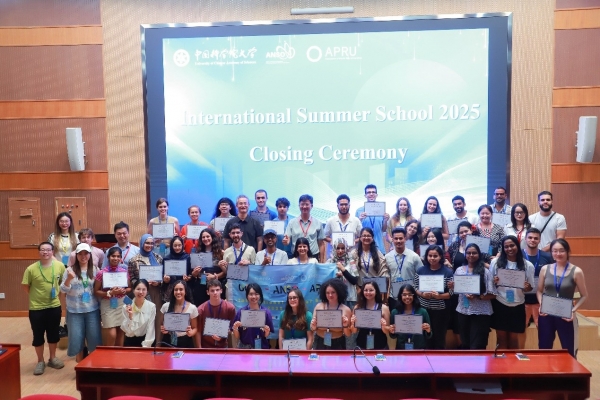
Present completion certificates.
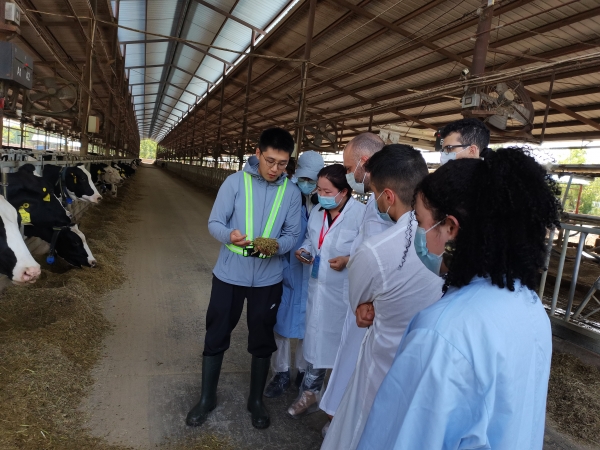
Scientific Research and Practice Activity at Jinyindao Ranch
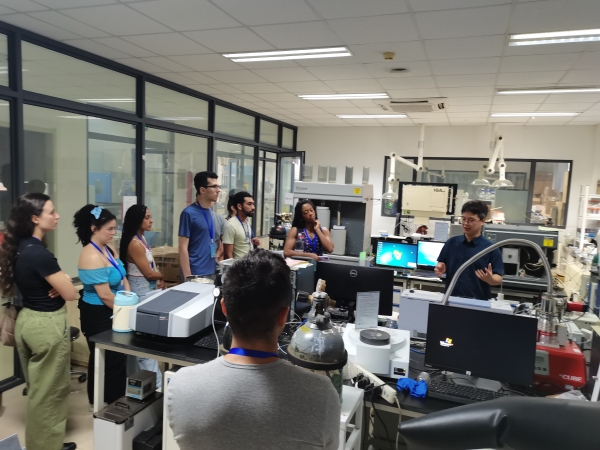
Visit to the National Engineering Laboratory for Volatile Organic Compounds Pollution Control Materials and Technologies
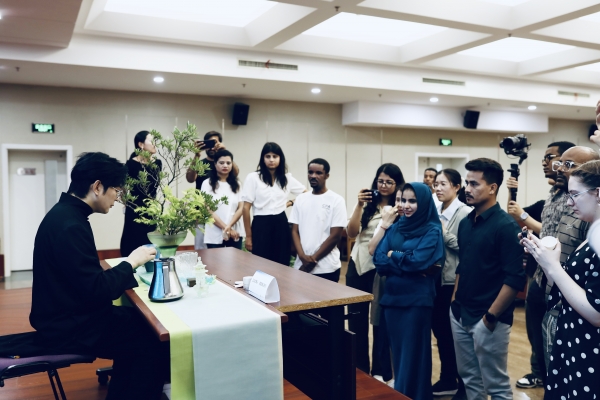
Participate in a tea culture experience activity.