
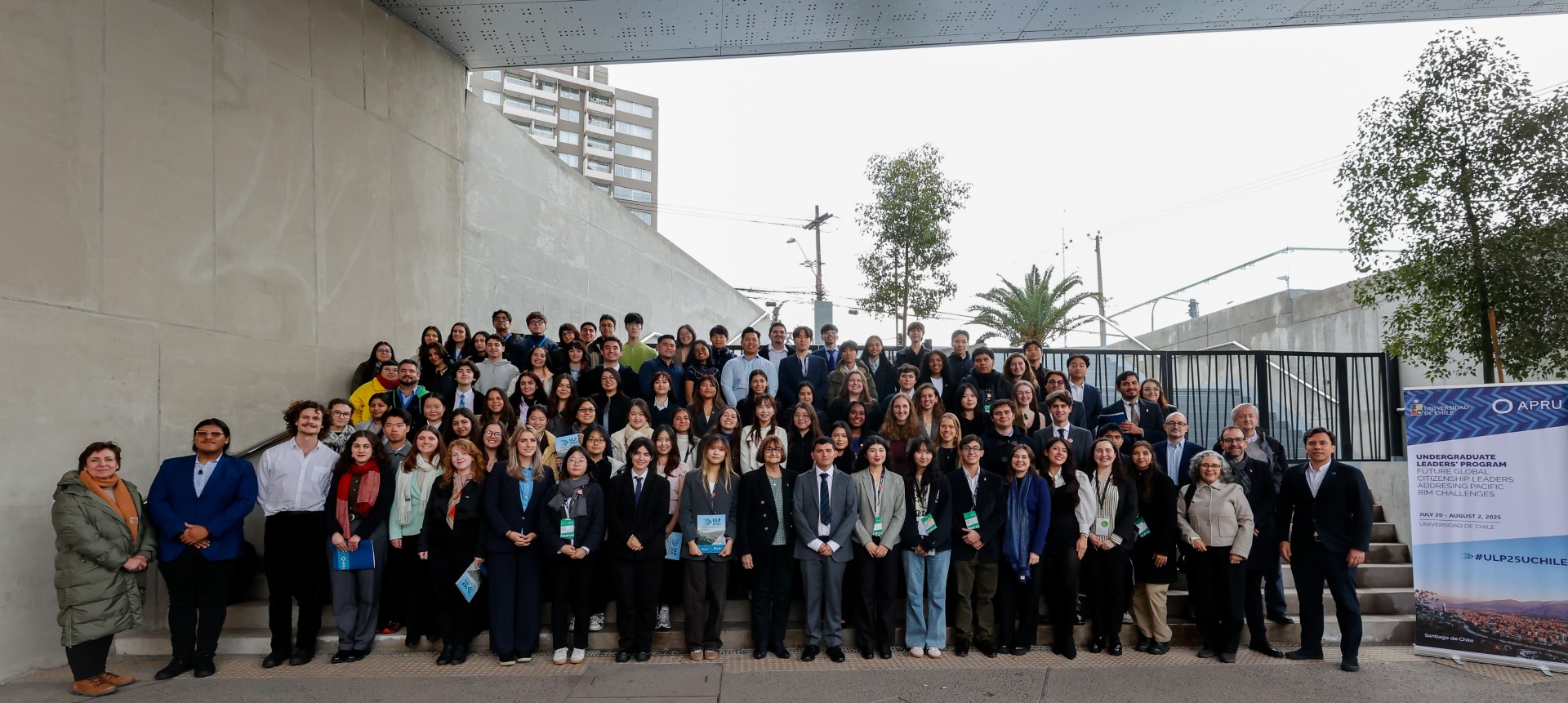
The Association of Pacific Rim Universities (APRU) Undergraduate Leaders’ Program (ULP) 2025, held from July 19 to August 2 in Santiago, Chile, marked a historic milestone for APRU. For the first time, this flagship student leadership initiative was hosted in South America, with the Universidad de Chile welcoming 72 undergraduate students from 25 universities across 12 economies for two weeks of immersive academic, cultural, and diplomatic exchange.
Under the theme “Future Global Citizenship Leaders: Addressing Pacific Rim Challenges” the program aimed to strengthen students’ leadership capacities while deepening their understanding of the complex, interconnected issues facing the Pacific Rim.
A Landmark Edition in Santiago
The program’s opening ceremony took place at the Salón de Honor of Universidad de Chile’s Casa Central, where Rector Rosa Devés emphasized the transformative role of ULP in preparing a new generation of leaders:
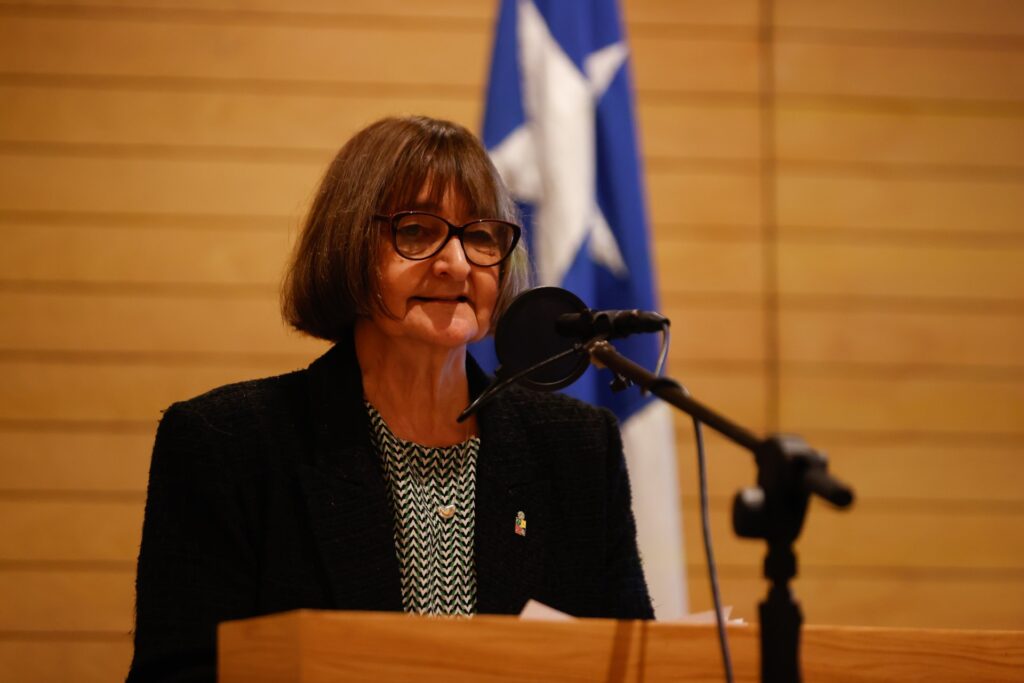
“The Pacific region, as is the world at large, faces complex, interconnected challenges: the climate crisis, cultural tensions, economic inequality, and growing threats to democratic values. These challenges cannot be tackled in isolation. They demand cooperation, empathy, and collective intelligence, especially from the new generations who will forge the future. The world we inhabit urgently needs your voices.”
Throughout the two weeks, students engaged in an intensive agenda blending seminars, workshops, simulations, site visits, and cultural activities. Highlights included an international seminar on the future of democracy, featuring world-renowned speakers such as Nobel laureate Joseph Stiglitz and economist Ha-Joon Chang, and, which was attended by Chile’s President Gabriel Boric, as well as sessions on indigenous knowledge, gender leadership, and sustainable development.
The Problem-Solving Challenge, held at Universidad de Chile’s Juan Gómez Millas Campus, provided a platform for students to co-create innovative solutions to pressing regional and global challenges. Teams presented their proposals to an international jury, reinforcing the program’s emphasis on practical, collaborative problem-solving.
Collaboration, Diversity, and Empathy
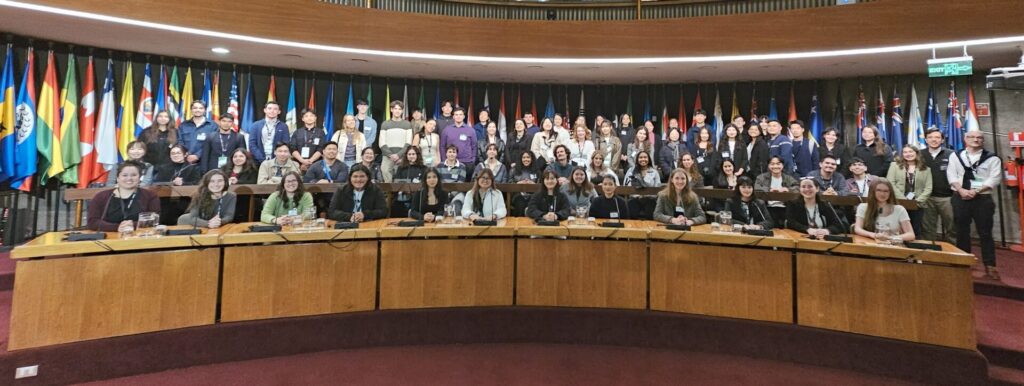
Beyond the formal agenda, ULP 2025 created invaluable spaces for dialogue across cultures and disciplines. Students from economies as diverse as Australia, Canada, China, Ecuador, South-Korea, Malaysia, and the United States joined peers from Chile and the wider Latin American region, building connections that APRU hopes will evolve into long-term collaborations.
For many participants, this was their first time experiencing Latin America, adding unique depth to the program. Visits to local institutions, including the UN Economic Commission for Latin America and the Caribbean, the Museum of Memory and Human Rights, the Parque Humedal Río Maipo, and conversations with Chilean policymakers and diplomats, helped ground global issues in local realities.
Zoe Stojanović, a student from the University of British Columbia, reflected on the personal impact of the program:
“It was incredible to connect with so many cultures. I learned a lot from the seminars and activities, but also from every moment spent talking with people. It was a pleasure to have this opportunity to speak with other young leaders, I return very inspired.”
David Quimbayo, APRU’s Program Manager for Student Leadership, highlighted the historic significance of the Santiago edition:
“This is the first time the ULP is held in South America, and it is a great opportunity to offer a Latin American perspective on our shared challenges. We believe in the transformative power of dialogue, learning through our differences, and global citizenship as practice.”
Voices of Leadership
The closing ceremony featured reflections from leaders in government and academia. Minister of Women and Gender Equality, Antonia Orellana, underscored the urgency of responsible, values-driven leadership:
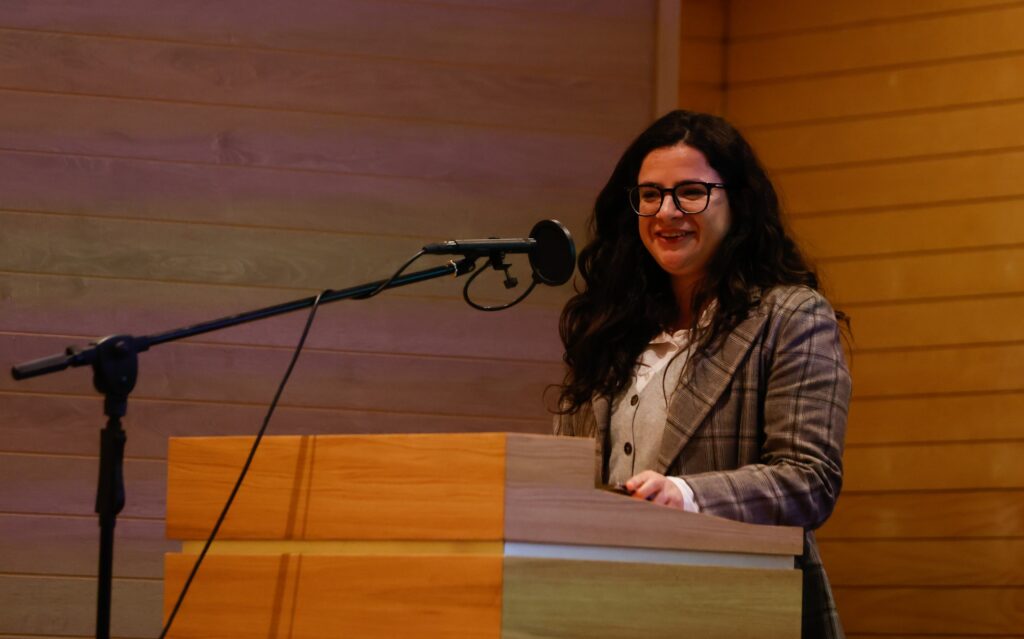
“This generation is facing challenges without precedent. Democracies are being tested, and many of the rights women have fought for are under strain. Young leaders must not only inherit opportunities, but transform them.”
Carlos Rilling, Executive Director of the Rector’s Office at Universidad de Chile, pointed to the human dimension that defined this year’s program:
“This program was built not only on academic content, but on mutual respect, active listening, and collaboration. You created an environment of shared learning that respected differences and promoted dialogue and reflection.”
Closing with a Call to Lead with Empathy
In her final words, Rector Devés reminded students of the transformative responsibility they carry forward:
“When you grow, we grow. We hope you return to your countries not only with new knowledge and skills, but also with a renewed sense of responsibility and empowerment to bring your dreams to reality.”
Quimbayo echoed this sentiment, encouraging students to embody leadership rooted in compassion:
“Leadership is important and necessary, but beyond roles or circumstances, remember to lead with kindness, understanding, and respect.”
Looking Ahead
As APRU reflects on this landmark edition, ULP 2025 demonstrated the enduring power of bringing young leaders together to address shared challenges. It was an opportunity to position Latin America as a vital voice in Pacific Rim collaboration, while inspiring students to imagine and co-create more inclusive, resilient, and cooperative futures.
With preparations already underway for APRU ULP 2026, the legacy of this years’ program will live on, not only in the experiences of the students who participated, but in the global networks and friendships that continue to grow across the Pacific.