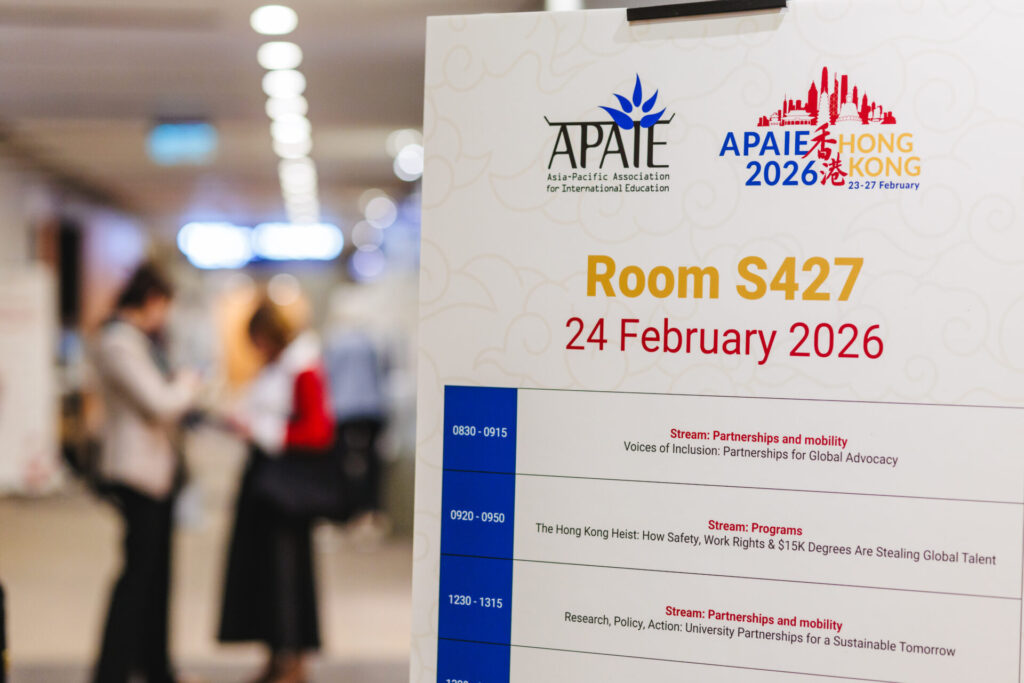
APRU at APAIE 2026
APRU was delighted to contribute to APAIE 2026 with a series of panel sessions showcasing how our network’s collective expertise is shaping the future of international higher education across the Asia Pacific. This article is one of four in a special APRU series sharing insights from our conversations at APAIE 2026. APAIE 2026—the premier gathering of international higher‑education leaders, policy makers, and industry professionals—hosted by The Chinese University of Hong Kong convened from February 23–27 under the theme Asia‑Pacific Partnerships for the Global Good. This year’s conference brought together 3,592 participants from 72 regions, featured 600+ organisations in the exhibition, welcomed 570 delegates to pre‑conference workshops, delivered 120 presentations and 3 plenaries.
Session Report
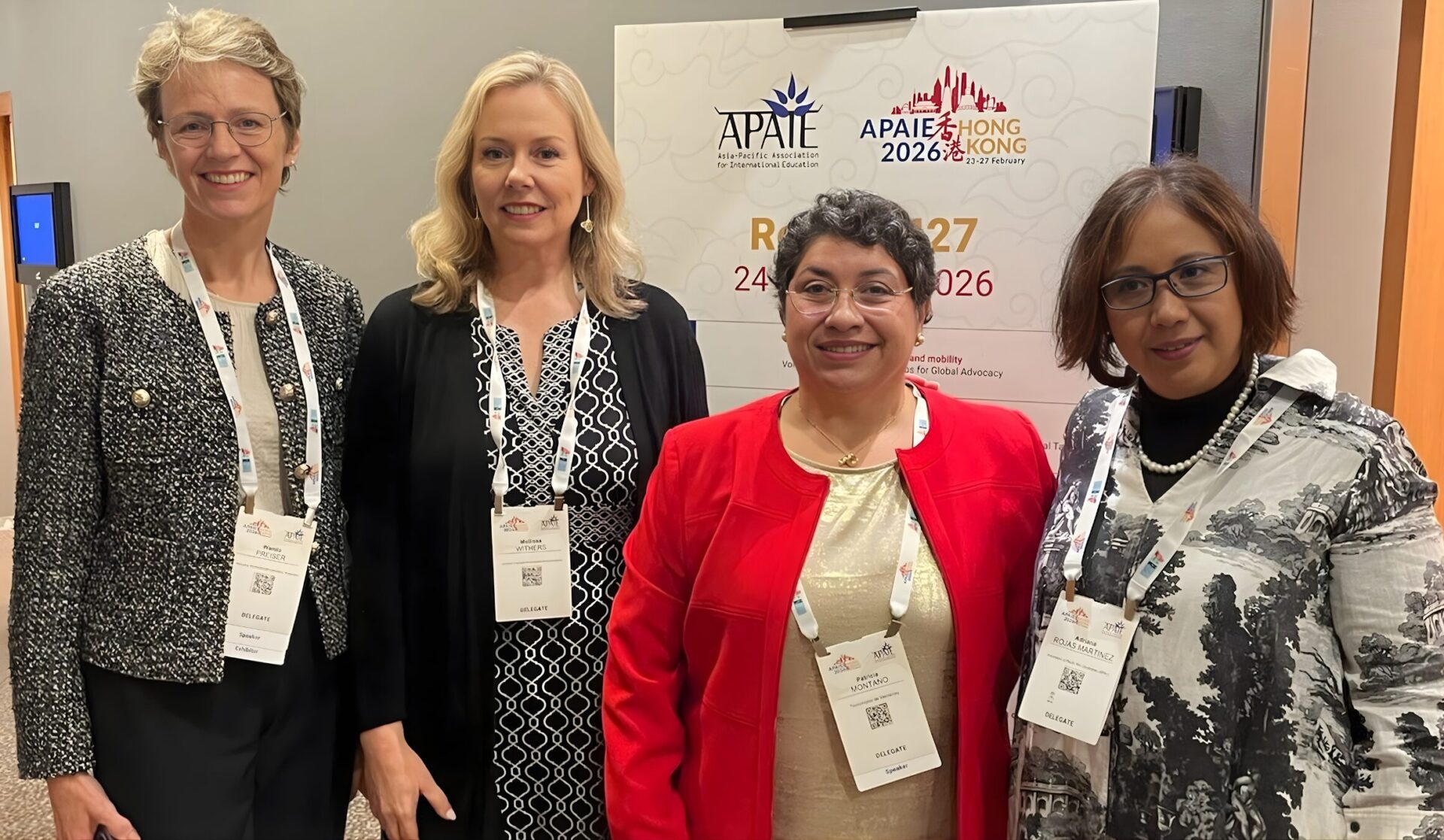
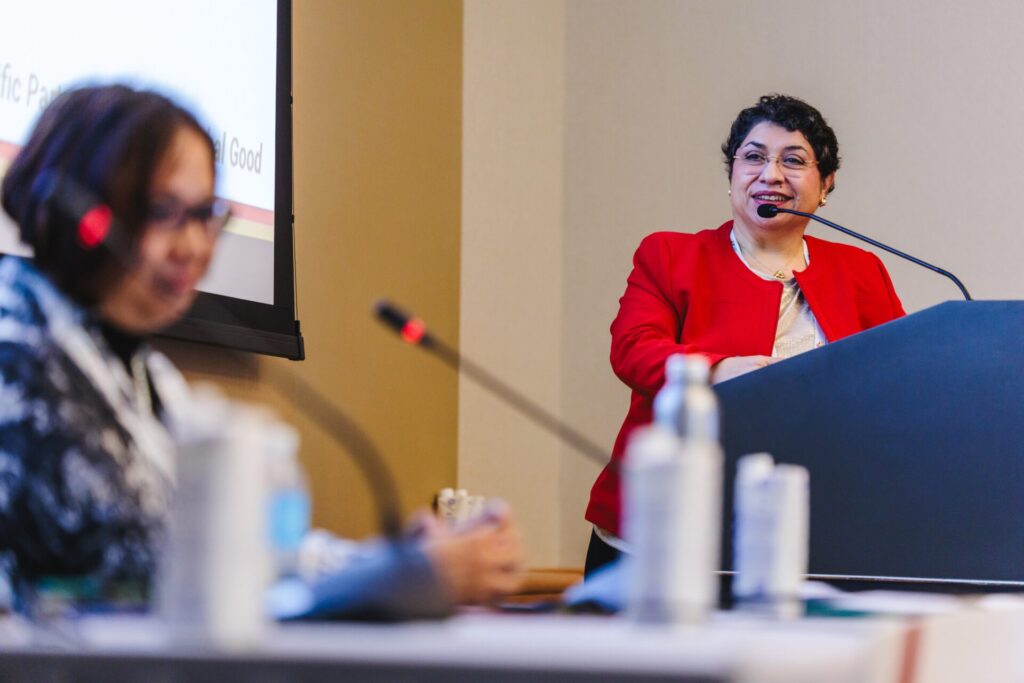
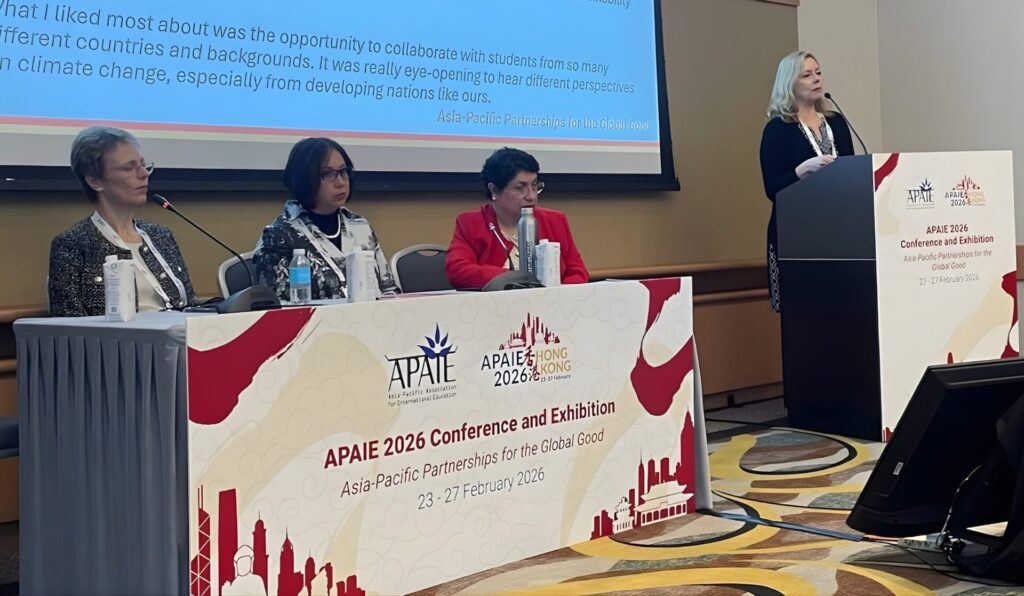
Voices of Inclusion explored how universities can critically evaluate partnerships to ensure they are equitable, accessible, and designed to empower students across diverse contexts. Chaired by Patricia Montaño, Director of Innovation and International Networks, Tecnológico de Monterrey, Mexico the session featured three case studies from the APRU network. Speakers shared programs spanning sustainability, Indigenous knowledges, and global health collaboration.
Waste and the City — NTU Singapore
Wanda Preiser, Head, Office of International Engagement, Nanyang Technological University (NTU), Singapore highlighted NTU’s flagship sustainability course, jointly taught with partner universities across multiple time zones, integrating speakers from Google, Procter & Gamble, and the Alliance on Plastic Waste. Highlighting the partnership value to the program, Preiser said, “Partnership is based on neutrality, equity, and common ground… if everyone at the table can’t see value, it doesn’t last.”
Indigenous & First Nations Knowledges Network — APRU
APRU’s Indigenous Knowledges initiative, co-founded with The University of Melbourne and Tecnológico de Monterrey, was presented as an evolving model for inclusive research collaboration, showcasing annual summits and the “Roots and Bridges” webinar series. Adriana Rojas, Senior Director, APRU Programs, highlighted the importance of building trust and reciprocity, she said, “We started with good intentions, then listened, with empathy. The magic began when scholars could finally come together and co‑create.”
Global Climate Change Simulation — USC & University of Oregon
Professor Mellissa Withers, Program Director, APRU Global Health Program and Professor of clinical preventive medicine, Dept of Population and Public Health Sciences, University of Southern California spoke about the program’s growth to 26+ universities and its new assessment framework measuring leadership and diplomacy competencies. She highlighted the importance of committing to the process and refining key aspects of the program as it develops, she reporting on a key measurement tool, “We asked: how are we measuring leadership and global citizenship? … We built a survey from the literature and we’re seeing very high gains across the board.”
Key insights from the discussion:
- Design for equity up front. NTU’s course is intentionally structured for inclusion and reciprocity: cross‑time‑zone synchronous teaching, curated small‑group case discussions, multi‑disciplinary faculty teams, and a blend of industry and NGO speakers. Partners jointly shape content while students receive NTU credit and a UNITAR‑endorsed certificate, recognition that matters for career value.
- Broaden who’s “at the table.” APRU’s Indigenous Knowledges initiative began with a listening posture, and it grew into an annual summit and public webinar series (Roots and Bridges), and is now building a mentoring stream and student opportunities which are open to scholars within and beyond APRU to ensure breadth and reciprocity.
- Measure leadership and global citizenship—not just content knowledge. The climate simulation expanded from a one‑day exercise into a month‑long, multi‑university learning experience that now uses validated instruments to track changes in students’ self‑efficacy, diplomacy, and cross‑cultural skills. Inclusion is operationalized via fee differentials for lower‑income contexts and active recruitment of Pacific Island perspectives.
This session demonstrated how APRU institutions are pushing beyond traditional models toward inclusive, equitable, and globally connected education. As universities continue to address climate change, social inequity, and global mobility disruptions, these partnership models offer a roadmap for collective action that is both ambitious and grounded in evidence.