Building Resilient and Inclusive Higher Education Systems
March 6, 2026
01

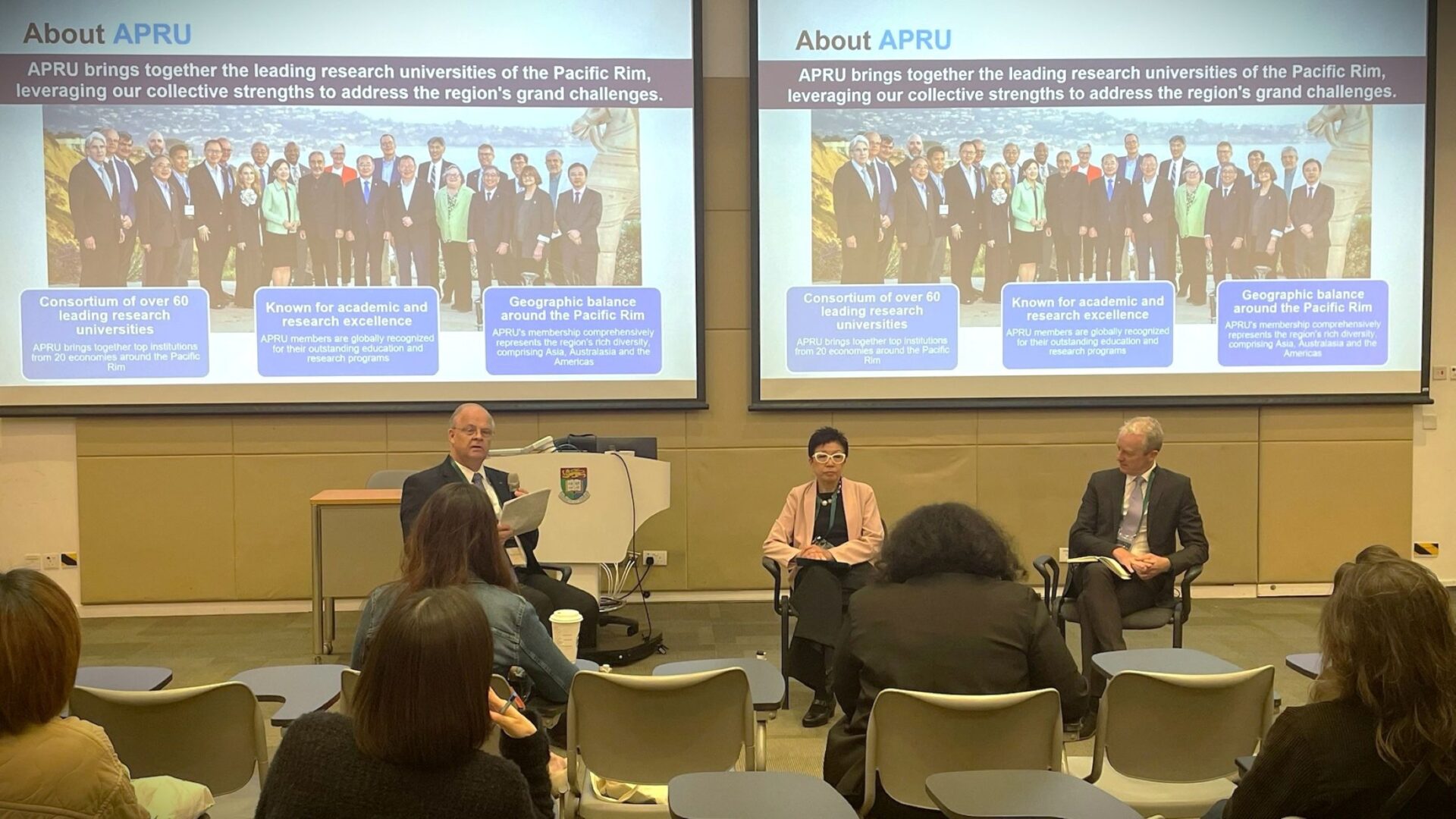
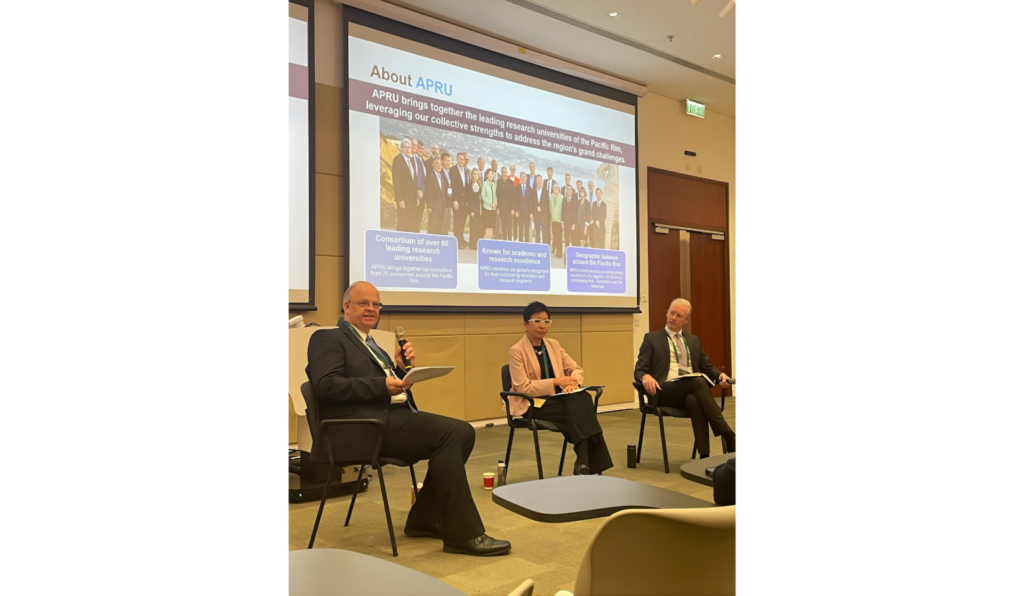
The University of Hong Kong (HKU) hosted HKU Partner Day 2026 on February 22–23, a dynamic two-day event serving as a prelude to the Asia-Pacific Association for International Education (APAIE) 2026 Conference. The event brought together over 400 higher education leaders, institutional partners, and scholars from around the world to strengthen global collaboration and explore emerging trends shaping the future of education. APRU contributed to the success of the two-day event by preparing an in-depth discussion titled, “Building Resilient and Inclusive Higher Education Systemsfeaturing Professor Cindy Fan, Vice Provost for International Studies and Global Engagement, University of California, Los Angeles (UCLA) and Prof. Erik Lithander, Deputy Vice-Chancellor (Strategic Engagement), The University of Auckland.

Opening the session, Professor Thomas Schneider, APRU Chief Executive, placed APRU in a long arc of cross‑border collaboration, emphasizing how a 64‑member network can operate as a “super connector” between universities, governments, industry and civil society, particularly when geopolitical or technological shocks test campus systems. He challenged participants to interrogate what “resilience” and “inclusion” actually mean across different Asia-Pacific contexts and argued that diversity of perspectives, such as biodiversity in nature, strengthens institutional ecosystems: “Nature is always a good example… hubs of biodiversity are more beneficial than monocultures; diversity is always beneficial.”

The discussion would treat resilience not simply as “weathering a storm,” but as responsiveness grounded in mission; and inclusion not as a set of siloed equity programs, but as a whole‑of‑institution orientation supported by transparent leadership and international partnerships.

What Resilience Looks Like on Campus

Professor Cindy Fan, UCLA described resilience in practice as pursuing two concurrent goals during crises: (1) academic continuity (keeping teaching and research going despite disruptions) and (2) strengthening community (using crises to rebuild trust and connection). She shared UCLA initiatives such as Dialogue Across Difference and targeted efforts to combat antisemitism, designed to “reset the table” for listening across profound disagreements. Her metaphor: resilient universities are like palm trees, “You might see branches coming down, but they don’t really break… universities that have deep roots, in mission clarity, bend with the winds but don’t snap.” She later tied inclusivity to the concept of inclusive excellence: diversity and excellence are “two sides of the same coin.” Resilience must be built before the next crisis through trust, transparency, and connectivity (e.g., frequent senior‑leadership briefings; open communication about decisions and budgets). Fan shared a new framing of DEI as inclusive excellence, embedding it into academic standards rather than treating it as an add‑on.


Resilience Without Responsiveness Is Stubbornness

Professor Erik Lithander, University of Auckland cautioned against the “dark side of resilience”: “When you have resilience without responsiveness, that’s stubbornness.” He argued that while universities admirably protect core missions during shocks, the sector has been slow to adapt a centuries‑old instructional model and has “lost social licence” with publics, media and governments by failing to articulate value beyond teaching and research headlines. The task ahead is to “recapture the imagination and the support of our constituents” through consistent engagement, diversified revenue, and coalitions of external partners, including international associations like APRU. He also emphasized that resilience is not only internal capacity; it also depends on external legitimacy. Universities need systematic outreach to rebuild relationships with government, media, business and alumni, to communicate tangible societal contributions, not just institutional needs.

Inclusivity: Holistic Vision, Practical Delivery

The panel contrasted holistic inclusion with group‑by‑group approaches. Lithander noted Auckland’s Māori‑informed values (relationship‑building, kinship, generosity) as a compass for creating a campus climate that is inclusive for everyone, while acknowledging the continued need for targeted services (e.g., disability support) in the near term. Fan offered LA‑grounded metaphors (“salad bowl” over “melting pot”) and examples (heritage graduations that are open to all), underscoring that inclusion honors difference without reverting to silos: “The only way to achieve excellence is to encourage and embrace diverse viewpoints.”  A model which builds a pervasive culture of inclusive excellence and maintains practical supports for groups with specific needs is necessary so the philosophy and the infrastructure reinforce each other.

AI, Futures, and the Skills That Endure

In audience Q&A, speakers explored AI’s uncertain effects on student demand, disciplinary enrollment, and academic integrity. Lithander flagged the strategic risk to programs if careers are perceived as “in the firing line.” Fan argued universities should focus on foundational competencies, such as critical thinking, analysis, communication, teamwork, and mindset development so graduates can navigate job markets that don’t yet exist: “How do we help students acquire skills and resilience to be competitive in a job market that is always changing?”

While the technology trajectory is unclear, a mission‑anchored skills core remains the most reliable hedge. Institutions should also collaborate through APRU on shared AI challenges (policy, pedagogy, integrity).

Lessons on Building Resilient and Inclusive Higher Education Systems

  1. Anchor in mission; design for responsiveness. Resilience equals continuity and the capacity to adapt, not a return to the status quo.
  2. Rebuild social licence. Proactive, long‑horizon engagement with external stakeholders is essential to sustain support.
  3. Make inclusion systemic. Treat inclusive excellence as core to academic quality while retaining targeted services that meet concrete needs.
  4. Leverage the network. Use APRU as a platform for coalitions and co‑design (e.g., APWiL, Indigenous Knowledges, AI in Higher Education initiatives) that translate principles into scalable practice.
Related Articles
APRU Delegation Visits Shanghai Jiao Tong University and Tongji University
more
In Memoriam: Dr Yong Zulina Zubairi
more
Deepening APRU Connections Across Southeast Asia
more
The Association of Pacific Rim Universities and the Digital Education Council Announce Collaboration
more
APRU Welcomes Three New Members: Universidad Nacional Autónoma de México, Universiti Brunei Darussalam, and VinUniversity
more
Voices of Inclusion: Partnerships for Global Advocacy
more
APAIE 2026: Asia Pacific Partnerships in Mentoring Aspiring Women Leaders
more
Programs with Purpose: Collaborative Pathways for the Global Good
more
APRU Strengthens Strategic Partnerships Across the United States
more
In Memory of Professor Emma Johnston AO
more
Roots and Bridges 2025: A Year of Connection, Reflection, and Indigenous-Led Knowledge Sharing
more
Breaking Stereotypes and Building Intercultural Skills
more
Sailing in the Wake of Neruda: APRU Strengthens Partnerships in Chile
more
Global Range, Local Change: APRU Senior International Leaders Unite at Universidad San Francisco de Quito
more
Transnational HE Networks Can be Catalysts of Change
more
APRU Welcomes SUSTech: Celebrating Excellence Across the Pacific Rim
more
Strengthening Regional Collaboration: APRU Visits Six Leading Australian Universities
more
Biomedical research enters new era amid global shifts
more
AI and Human Longevity: Universities’ Role Beyond Research
more
APRU’s 2025 Roots and Bridges Series opens with a deep dive into Waipapa Toitū
more
APRU Open Dialogues 4th Cohort: Students Reflect on Stereotypes in a Globalized World
more
APRU Announces Indigenous and First Nations Knowledges Network Presidential Champions
more
[APRU Member Visits] APRU Chief Executive Visits Waseda University and Keio University to Strengthen Collaboration
more
APRU Member Visit to University of Michigan Highlights Progress on Global Engagement
more
Setting the Stage for Forest Innovation: APRU FELLI's Inaugural Meeting
more
New Member Visit to University of Alberta Helped Identify Opportunities for Collaboration
more
Professor Rocky Tuan Leads the Way as APRU's Newest Ambassador
more
APRU and Universiti Malaya Discuss Current and Future Partnership
more
Universidad de Chile Celebrated the 3rd In-person International Workshop of the APRU Indigenous Knowledges Network
more
APRU Has Fruitful Discussions with Chulalongkorn University in Bangkok
more
APRU Visits Top Universities in China
more
APRU Prepares Onboarding Session for National Yang Ming Chiao Tung University’s Top Leaders
more
Asia Pacific Open Dialogues: Uniting University Voices Against Partner Violence
more
Connecting the Indigenous Knowledges: Roots and Bridges Seminar Series 2024
more
APRU welcomes three exceptional members to the network: National Yang Ming Chiao Tung University, University of Alberta, and University of Michigan
more
APRU Open Dialogues 2nd Cohort brings together students to dialogue about what is the right to Higher Education
more
Building Bridges: Universidad de Chile's Inclusive Education Initiatives Through APRU Virtual Student Exchange at APEC HRDWG Meeting
more
Fruitful Visits to APRU members in China
more
APWiL webinar highlights the many roles women academics juggle while gaining ground in leadership
more
APRU At APEC Policy Partnership on Science, Technology, and Innovation in Lima, Perú
more
Gathering views, exploring new ways: APRU delegation meets Latin American members
more
“Staff training” core to online int’lisation
more
Delegation of the Association of Pacific Rim Universities (APRU) visited the Central House
more
Indigenous Knowledge Has the Power to Help Address the Climate Crisis
more
APWiL Mentoring Program keeps growing, 4th Cohort takes off
more
APRU Indigenous Knowledges Network meets in Melbourne
more
SDG4GC - How a growth mindset can open a world of opportunity
more
APRU APEC University Leaders' Forum 2023 on KTVU FOX 2, CCTV+, Xinhua and China Daily
more
APRU Open Dialogues tackles Gender-Based Violence Prevention in Learning Environments
more
Innovative Approaches to Addressing Biodiversity Challenges: Thought Leaders Convene at the APEC University Leaders’ Forum 2023
more
President Gao Song Met with the Chief Executive of APRU
more
Visits to Korean, Taiwanese APRU-members bode well for the network in 2024
more
APWiL Mentoring Program 3rd Cohort concludes, having promoted teaching and learning in both directions
more
APRU Supports Frontiers Planet Prize 2024: Call for Submission
more
APRU Members Shine at Healthy Women Healthy Economies Prize
more
Invitation to APRU Members to Join CUPP 2024-2025 Tender
more
APRU inspired by visits to UC Davis and UC Santa Cruz
more
APRU Steering Committee 2023-2024
more
CUHK Hosts APRU Undergraduate Leaders’ Program on Sustainable Cities Development
more
Keio University News: Keio University Launches 2023 Mentoring Program to Promote Female Faculty Member Empowerment and Leadership
more
APWiL Third Cohort & Professor Freshwater as new APWiL Presidential Champion
more
APAIE 2023: APRU universities showcase successful student programs for social impact
more
New APRU Member – The University of Adelaide
more
APRU APEC University Leaders’ Forum 2022 Successfully Concludes with High-level Discussions on Preparing for the Next Pandemic
more
APRU on Bloomberg: APRU Readies for Looming Book Launch with Springer on Safety and Resilience of Higher Educational Institutions
more
New APRU member - Simon Fraser University
more
APRU on World Economic Forum: Universities can be 'living labs' for sustainability
more
APRU on Associated Press: APRU partners with United Nations ESCAP on The Asia Pacific Mayors Academy to Empower Mayors as Regional Leaders for Sustainability with Training Tailored to Unique Urban Challenges for a More Resilient Future
more
Winners of the 2021 APEC Healthy Women Research Prize
more
New Member Spotlight: Shanghai Jiao Tong University
more
New Member Spotlight: Universidad San Francisco de Quito
more
University of Malaya takes the lead on the APEC University Leaders’ Forum 2020
more
What are the co-benefits to SDG14 when making progress toward other SDGs? Initial findings reported at APEC SOM3 from the APRU Pacific Ocean Program
more
APEC Project DARE (Data Analytics Raising Employment)
more
APRU Contributes Insights on Innovation Networks and Latest Research Partnerships to Policymakers at APEC Meetings
more
APEC Health Meetings in PNG enriched by APRU insights
more
The APEC 2018 Workshop on Innovative Marine Debris Solutions, July 26-27, 2018, Beijing
more
Experts Welcome Framework for Developing APEC Skills
more
APEC University Leaders’ Forum Featured in University World News
more
Invitation to the 6th APEC Conference on Cooperation in Higher Education
more
APRU Research Experts say APEC Economies Must Build Educated and Mobile Workforces to Offset the Negative Impact of Aging Populations
more
1
81