
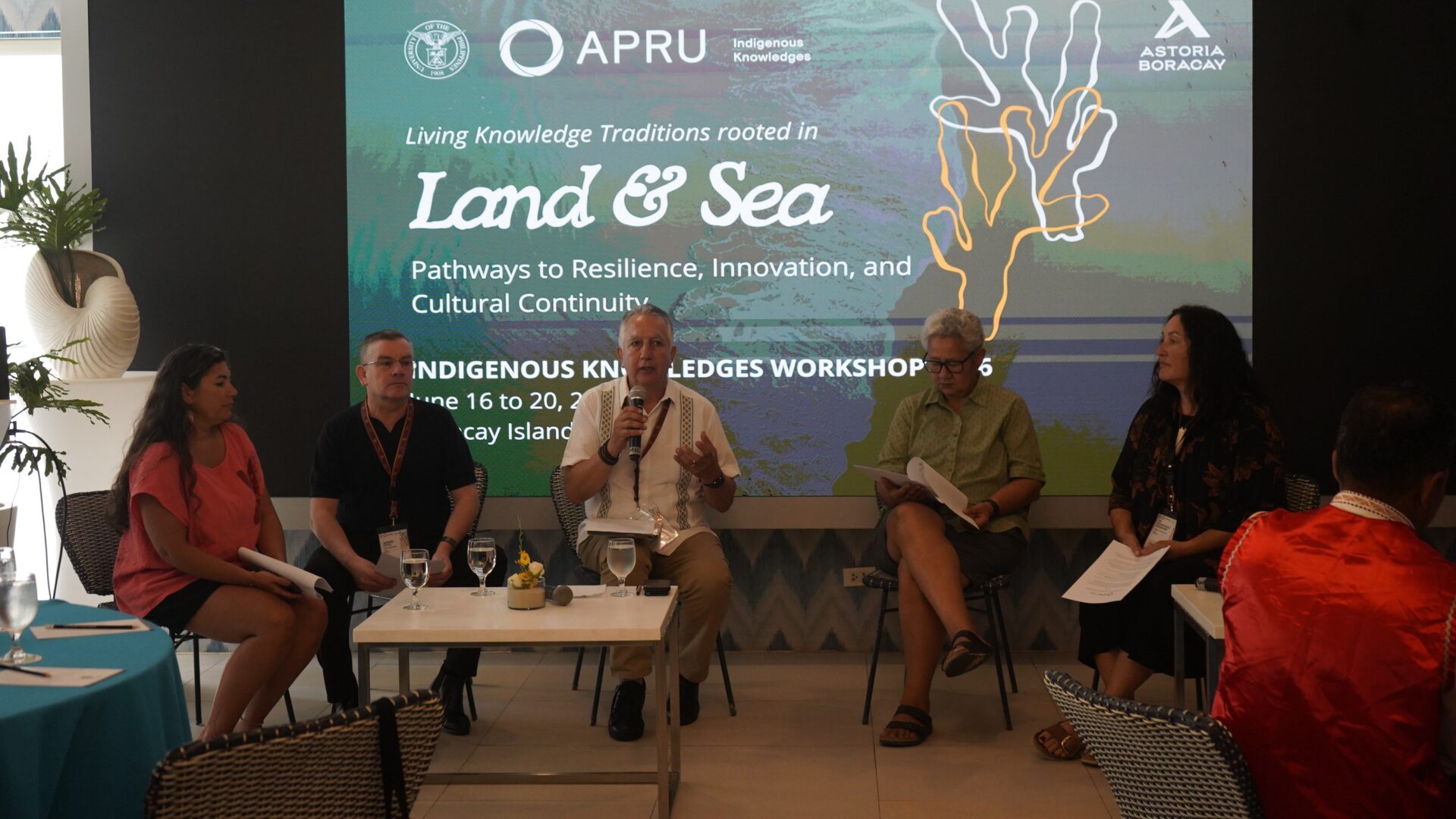
The Association of Pacific Rim Universities (APRU), which includes 64 leading universities covering 20 economies in Asia, Australasia and the Americas, explored how local ecological practices and community knowledge remain vital to sustainable development at its 4th Indigenous and First Nations Knowledges workshop from 16 to 20 June in the Philippines.
Emphasising the importance of the location on the Boracay island, home to the Ati indigenous community, for convening the meeting, Adriana Rojas, senior director of programmes at APRU, noted in her welcome remarks: “The knowledge systems rooted in land and sea, nurtured over generations by Indigenous peoples and local communities, are not only heritage to be preserved but also vital sources of insight for the pressing challenges of our time.”
| This article is part of a series on Pacific Rim higher education and research issues published by University World News and supported by the Association of Pacific Rim Universities. University World News is solely responsible for the editorial content. |
The theme of the international workshop, which was hosted by the University of the Philippines, was “Living Knowledge Traditions Rooted in Land and Sea: Pathways to Resilience, Innovation, and Cultural Continuity” and its sessions examined how universities can integrate Indigenous knowledge systems into research, teaching, and institutional priorities, and how leadership can create a culture of inclusivity and responsiveness.
“Indigenous peoples have practised forms of sustainability for generations through their relationships with land, sea, forests, rivers, and local ecosystems.
“What is often described today as resilience, stewardship, circularity, or sustainable resource management has long existed in Indigenous knowledge systems as part of everyday life,” Professor Angelo Jimenez, President of the University of the Philippines, which hosted the meeting, told University World News in an interview.
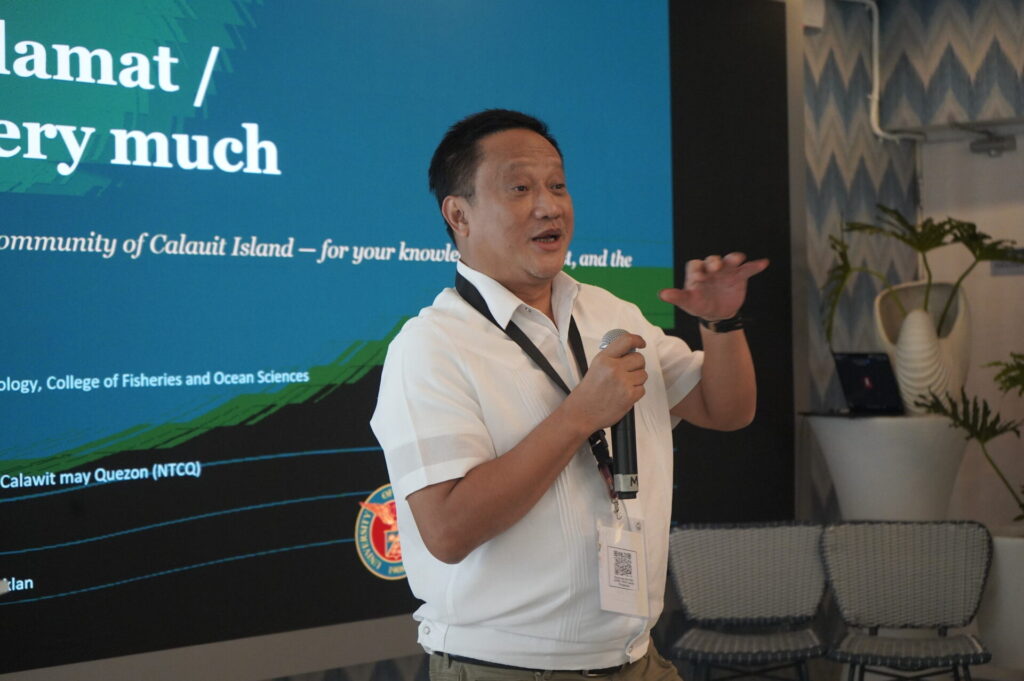
“One of the most valuable aspects of the workshop was the recognition that meaningful engagement with Indigenous knowledge begins with humility,” noted Jimenez, who is the first Indigenous person from the Philippines to be elected to the highest office of a public university in the country and one of the Presidential Champions of the APRU Indigenous and First Nations Knowledges Network.
Learning from communities
“Universities must be willing to listen, to question some of their assumptions, and to learn from communities whose knowledge traditions have often been overlooked or marginalised,” he added.
At the beginning of the meeting, the official reading of the APRU Indigenous and First Nations Knowledge Network Statement was recited by Indigenous Knowledges Network Co-chairs Dr Noelani Puniwai and Professor Adrian Little on behalf of the group.
Noting that “Indigenous knowledge systems represent a fundamental asset in our efforts to construct a sustainable world”, it lists five ways in which members of APRU can actively support and collaborate with Indigenous communities:
- Affirm the importance of Indigenous peoples and Indigenous knowledge systems, as Indigenous communities across the Pacific possess rich cultural heritages, deep connections to lands and waters, and invaluable wisdom passed down through generations.
- Honour the sovereignty and self-determination of Indigenous peoples: Indigenous peoples are the original custodians of their ancestral lands and waters.
- Emphasise the primacy of Indigenous knowledge as it encompasses a holistic understanding of the world, rooted in a deep relationship with nature and the environment.
- Commit to inclusion, safety, protection and respect environments by committing to fostering an inclusive, safe and respectful academic environment that values and integrates Indigenous perspectives.
- Create and enhance opportunities by being dedicated to supporting Indigenous students, academics, professional staff and their communities in taking full advantage of the opportunities afforded by universities.
Puniwai, from the University of University of Hawai’i at Manoa, who read part of the statement, told UWN that “our people, our culture, our ways of seeing the world bring another perspective that cannot be shared just on paper or in research projects. It must be lived, as Indigenous people continue their survival.”
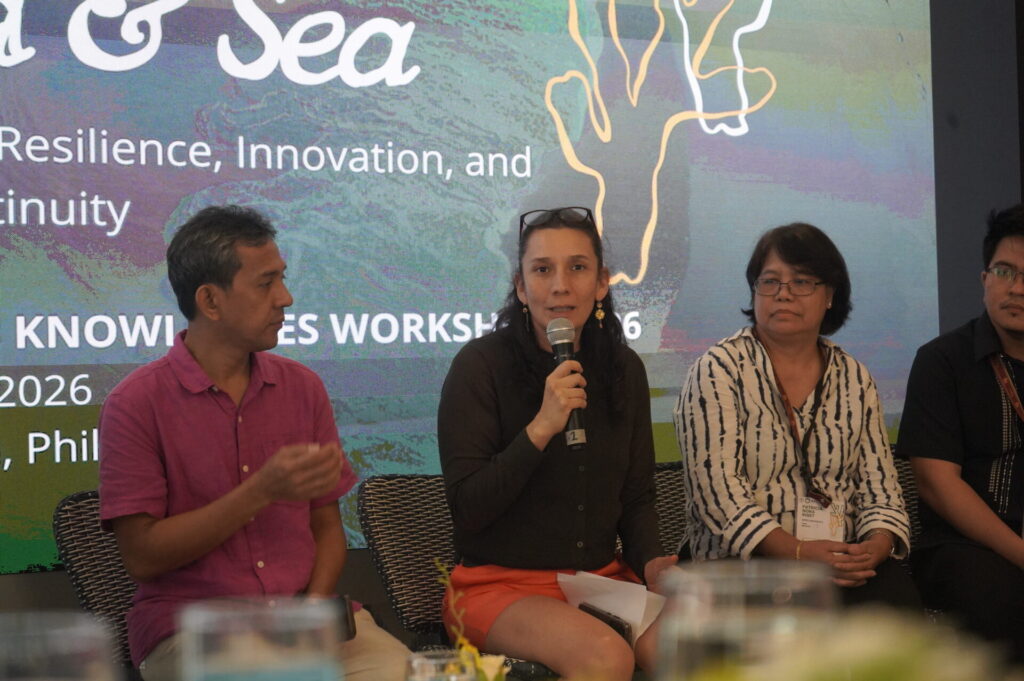
Puniwai argues that discussions at Boracay were different from those you will experience in an academic conference because “we are not sharing research studying an Indigenous culture but having conversations between and among Indigenous scholars who are all working at elite universities”.
In the process, she said: “We begin to normalise Indigenous pedagogies and methodologies and stigmatise unethical research practices that are extractive and repressive.”
Avoiding being extractive
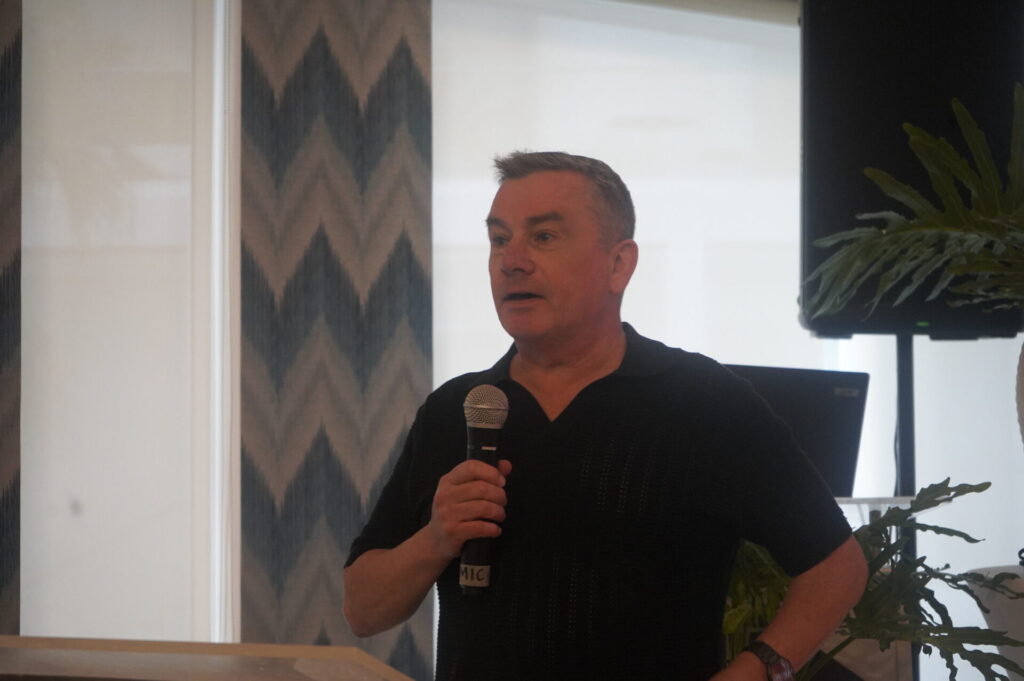
Little, from the University of Melbourne, pointed out to University World News in an interview that their group is “populated by Indigenous leaders across our member universities.
“By taking our lead from these leaders in our collective endeavours, we are determined not to be extractive … At our network gatherings, we also meet with local Indigenous communities to enhance the connections between universities and the Indigenous communities they should serve.”
Little says that their network has made climate leadership a core activity for member universities and their students. He points out that Indigenous knowledges are grounded in deep relationships to place and deep knowledge of climate.
“Indigenous practices of burning, for example, have proven more successful than more recent techniques in managing the extremes of fire and flooding that are increasingly affecting Australia.”
Giving Indigenous scholars agency
Puniwai says respect and understanding for Indigenous epistemologies cannot simply be learnt in a textbook or developed in a curriculum. “Relationships need to be developed and stigmatisms to be addressed.”
She says their network’s statement is a call to reflect and act for the ethical integration of Indigenous scholars into the academic field.
“There is a long road from studying Indigenous communities to allowing them to lead and have agency over their education and that which is shared about them,” she argues.
When asked about the history of patronising and appropriation of Indigenous knowledge, Jimenez told University World News that it arises when universities attempt to incorporate the knowledge without changing their relationships with Indigenous peoples themselves.
“Indigenous knowledge cannot simply be extracted, documented, and inserted into curricula while the communities that sustain it remain at the margins,” he argues.
Engagement requires reciprocity
“Meaningful engagement requires respect, reciprocity, consent, and shared responsibility. It means recognising Indigenous peoples not as subjects of study but as partners in knowledge creation.
“It also means understanding that Indigenous knowledge systems are not relics of the past. They are living, adaptive traditions that continue to offer insights into sustainability, governance, resilience, community, and our relationship with the natural world.”
He said several practical strategies were discussed during the workshop on how Indigenous knowledge cannot be treated as an add-on to existing institutional frameworks.
“The overall message was clear: integrating Indigenous knowledge is not a one-time initiative but a long-term commitment. It requires sustained relationships, institutional support, and a willingness to be transformed by what we learn,” argues Jimenez.
“In many ways, Indigenous knowledge systems remind us that progress and rootedness need not be opposites. They can, and must, advance together.”