
November 2025 | Belém, Brazil
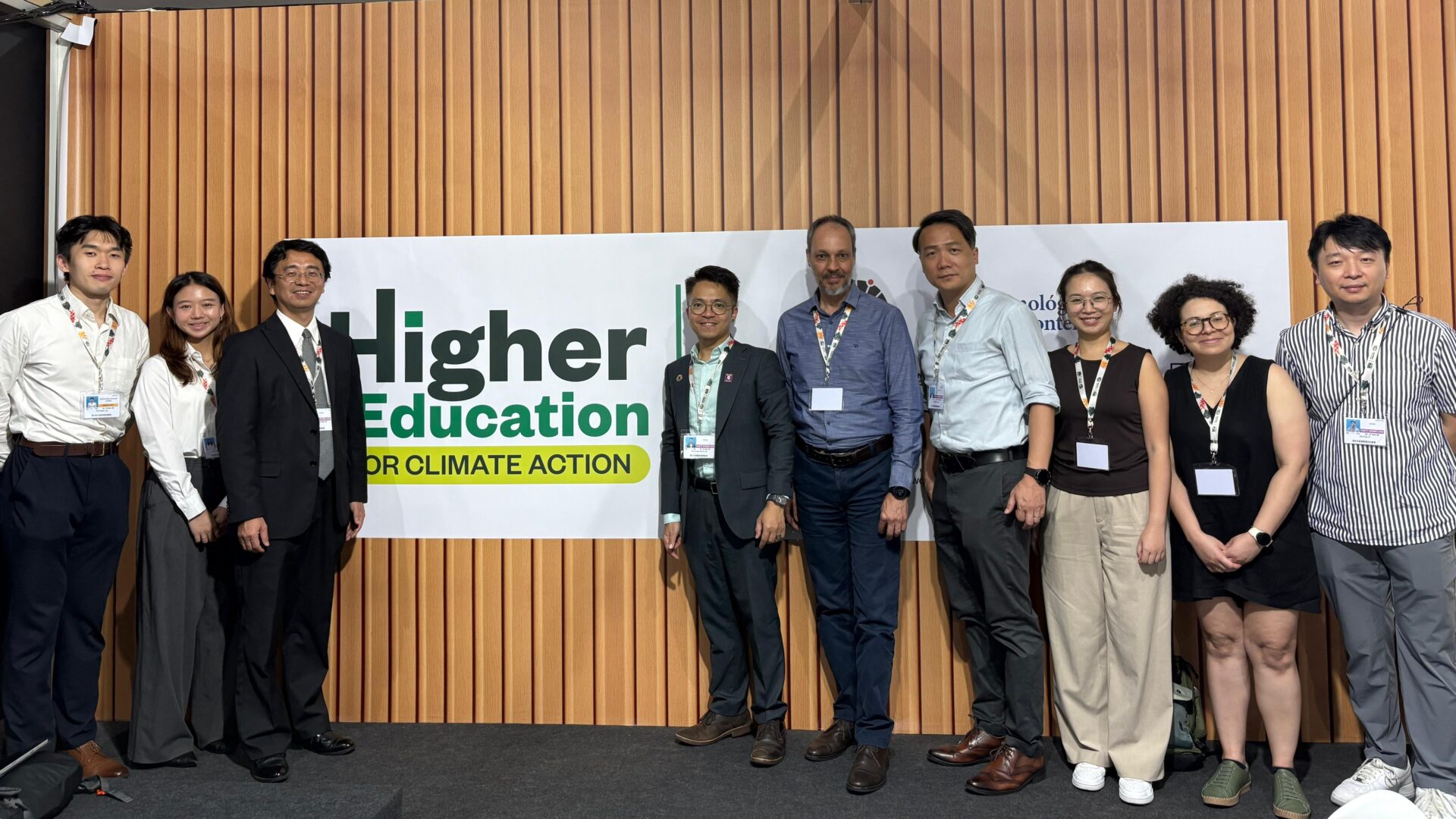
As the world convenes in Belém for the UNFCCC COP30, the spotlight is not only on global climate negotiations—but also on the transformative role of higher education in shaping climate solutions. Within the official UNFCCC Climate Action Zone, the Higher Education for Climate Action Pavilion is bringing together universities, researchers, students, and community leaders to showcase how academic institutions are driving real-world impact.
Among the key contributors are the APRU leaders, who are co-organizing two dynamic sessions that reflect the power of cross-regional collaboration and innovation in the Asia-Pacific.
Bridging Planetary Boundaries and Higher Education
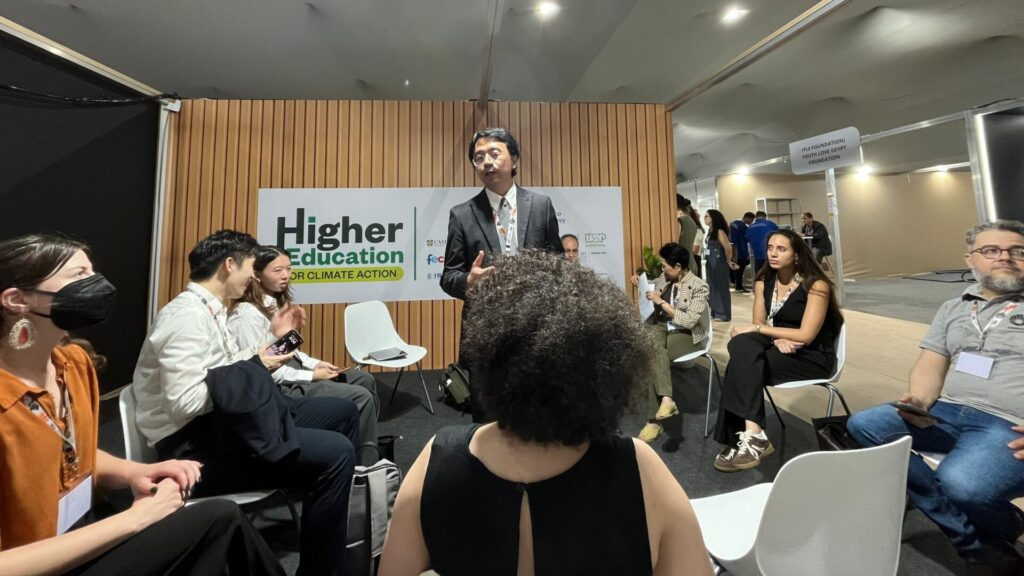
Organized by Simon Fraser University (SFU), The Chinese University of Hong Kong (CUHK), the University of São Paulo (USP), and Vale Technological Institute, this session explores how universities are scaling sustainability impact assessments and capacity-building frameworks. It highlights the integration of artificial intelligence, data systems, and multi-sector partnerships to support climate mitigation, adaptation, and just transitions.
Prof Yuan Xu, The Chinese University of Hong Kong emphasized APRU unique ability to connect multi-industry stakeholders around a common goal, “At COP30, APRU’s network of universities demonstrates how education and partnerships can turn planetary-boundary science into investable, locally grounded climate solutions, underscoring our shared role in shaping the future of global climate change.”

From Knowledge to Impact: Engaging Communities and Students
Led by SFU, the University of British Columbia and the University of Helsinki, this panel presents global case studies—from wildfire mitigation in Canada to permafrost management in the Arctic. The session emphasizes how universities empower students and communities to co-create climate resilience strategies through deliberative democracy, social innovation, and inclusive urban planning.
These sessions reflect a growing trend: higher education institutions are evolving from knowledge hubs into engines of climate action. As emphasized by the UNFCCC Climate Action portal, inclusive and interdisciplinary collaboration is key to achieving the Paris Agreement and the Sustainable Development Goals.
APRU’s Role in the Climate Action Ecosystem
With members spanning over 60 leading research universities across the Pacific Rim, APRU is uniquely positioned to foster collaboration across borders, disciplines, and sectors. Its presence at COP30 underscores a commitment to connecting academic research with policy, and mobilizing campus communities for global impact.
As climate challenges intensify, the Higher Education Pavilion at COP30 offers a powerful reminder: solutions begin with education, and progress is powered by partnerships.