
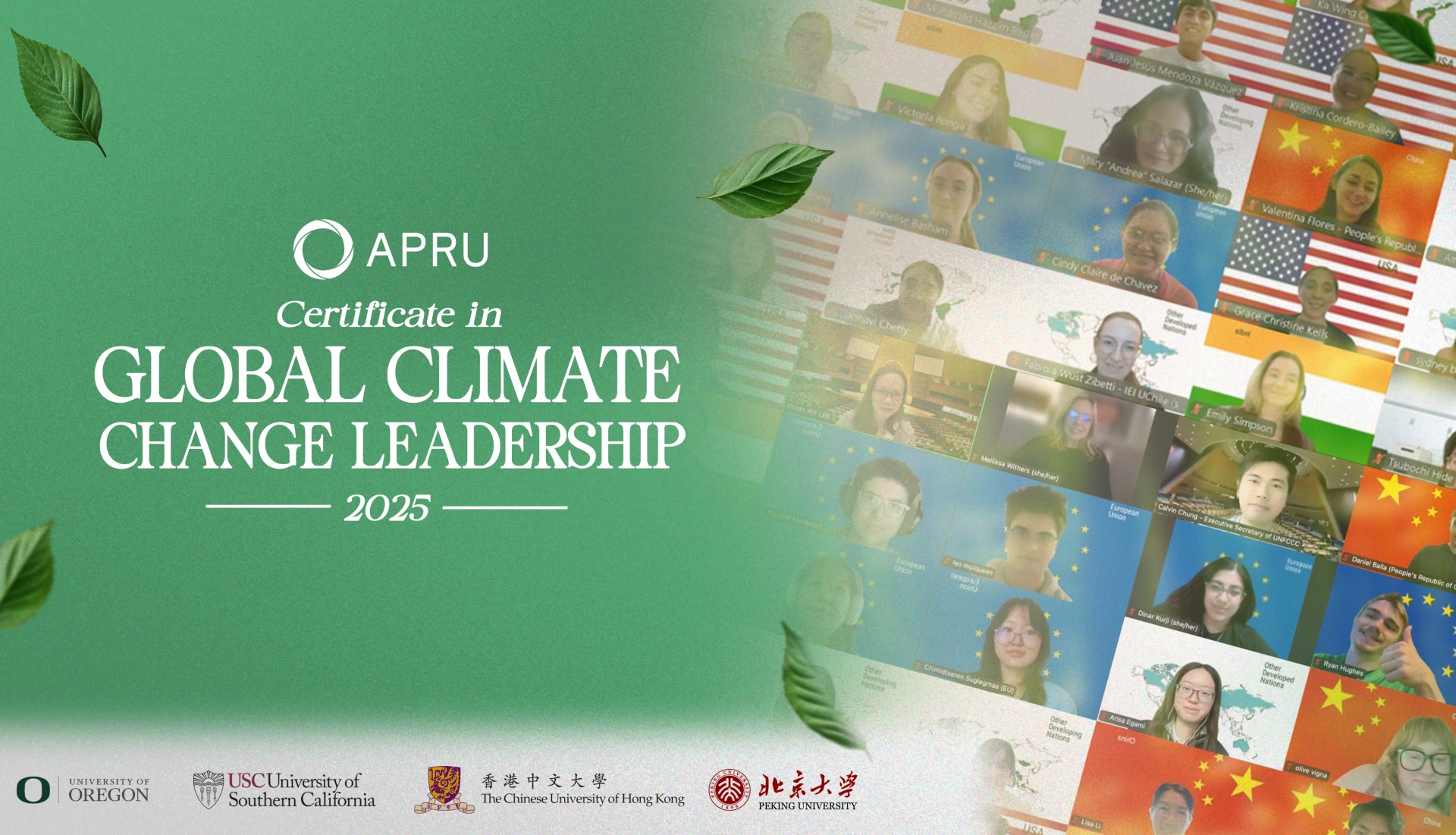
The 2025 edition of the APRU Certificate in Global Climate Change Leadership successfully concluded on May 2. This unique role-playing exercise brought together 180 students from 16 universities across 13 economies in the Asia-Pacific region. Participants formed international multidisciplinary teams to play the roles of delegates to the UN Climate Change Negotiations. The initiative is led by the University of Oregon and the University of Southern California, and co-organized by the APRU Sustainable Cities and Landscapes Program and the APRU Global Health Program.
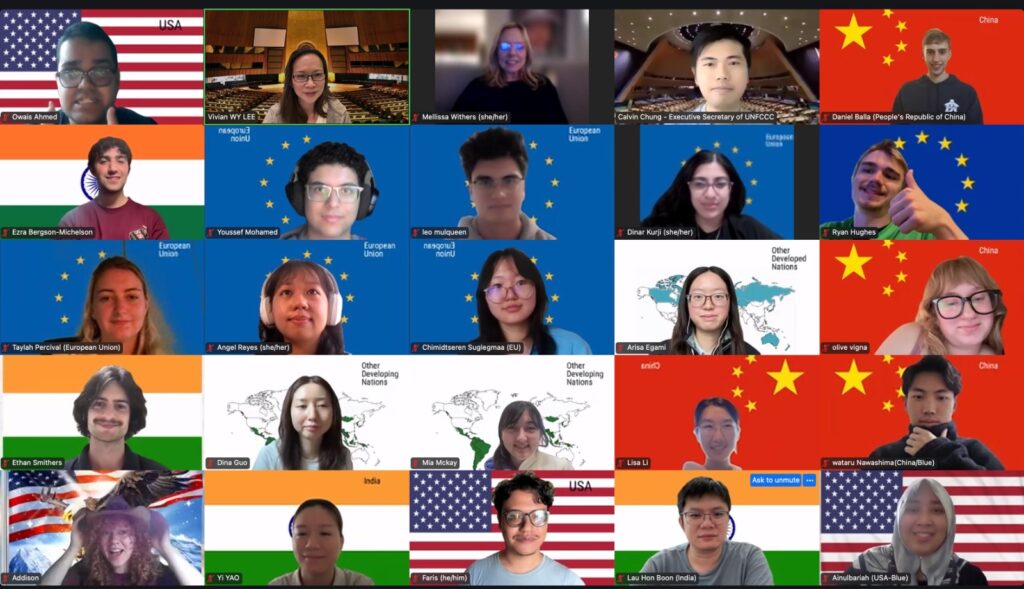
Throughout four sessions, students engaged in a fully online simulation using resources from the World Climate Interactive and the C-ROADS simulation model developed by MIT. These tools allowed participants to explore climate policy scenarios in real time while negotiating and debating the human and environmental impacts of climate change. This simulation exercise played a key role in enhancing students’ leadership skills, expanding their international networks, and gaining practical, action-oriented knowledge to address climate challenges. Their discussions were facilitated and deepened by input from leading experts who shared key perspectives on the global climate landscape, helping participants connect their simulation experience to real-world scenarios and equipping them with tools to drive meaningful changes within their own communities and future careers.
Mellissa Withers, Director of the APRU Global Health Program, highlighted the program’s dual value, not only in skill-building but also in offering access to world-class climate change experts: “This year’s speakers, experts on a range of topics —such as food insecurity, health, clean energy, biodiversity and more– demonstrated the many international efforts taking place across many sectors, including communities, governments, NGOs, and UN agencies. The importance of collaboration across disciplines and sectors was something that resonated with all participants.”
Global Education Specialist at the University of Alberta, and facilitator of this year’s program, Gavin Palmer, emphasized the significance of this learning experience in helping students better understand the complexity of climate challenges and the power of global collaboration: “Framing these interactions within a simulation provides intellectual safety, and glimpses at the complexity of the global climate change reality, as well as the collaborative work that must be done for us all to continue to thrive on this planet.“
Students’ feedback reinforced the program’s profound impact. Many participants described the simulation as eye-opening and fundamental in transforming their understanding of climate diplomacy. Ryan Welch, a Master of Public Administration student at USC Price, reflected: “Working with students from diverse cultural backgrounds and disciplines has enhanced my ability to communicate effectively across differences and synthesize varied perspectives into cohesive strategies. Perhaps most significantly, the simulation helped me understand climate change as an interconnected challenge requiring coordinated responses across sectors, nations, and disciplines.”
The APRU Certificate in Global Climate Change Leadership continues to be a powerful platform for equipping young leaders with the skills, perspectives, and global connections needed to tackle the climate crisis. Through immersive learning, international collaboration, and access to expert insights, students leave the program better prepared to tackle climate challenges within their communities and on the international stage. As the urgency of the climate crisis intensifies, learning experiences like this are fundamental in shaping a generation that is ready to lead with empathy, innovation, and purpose.