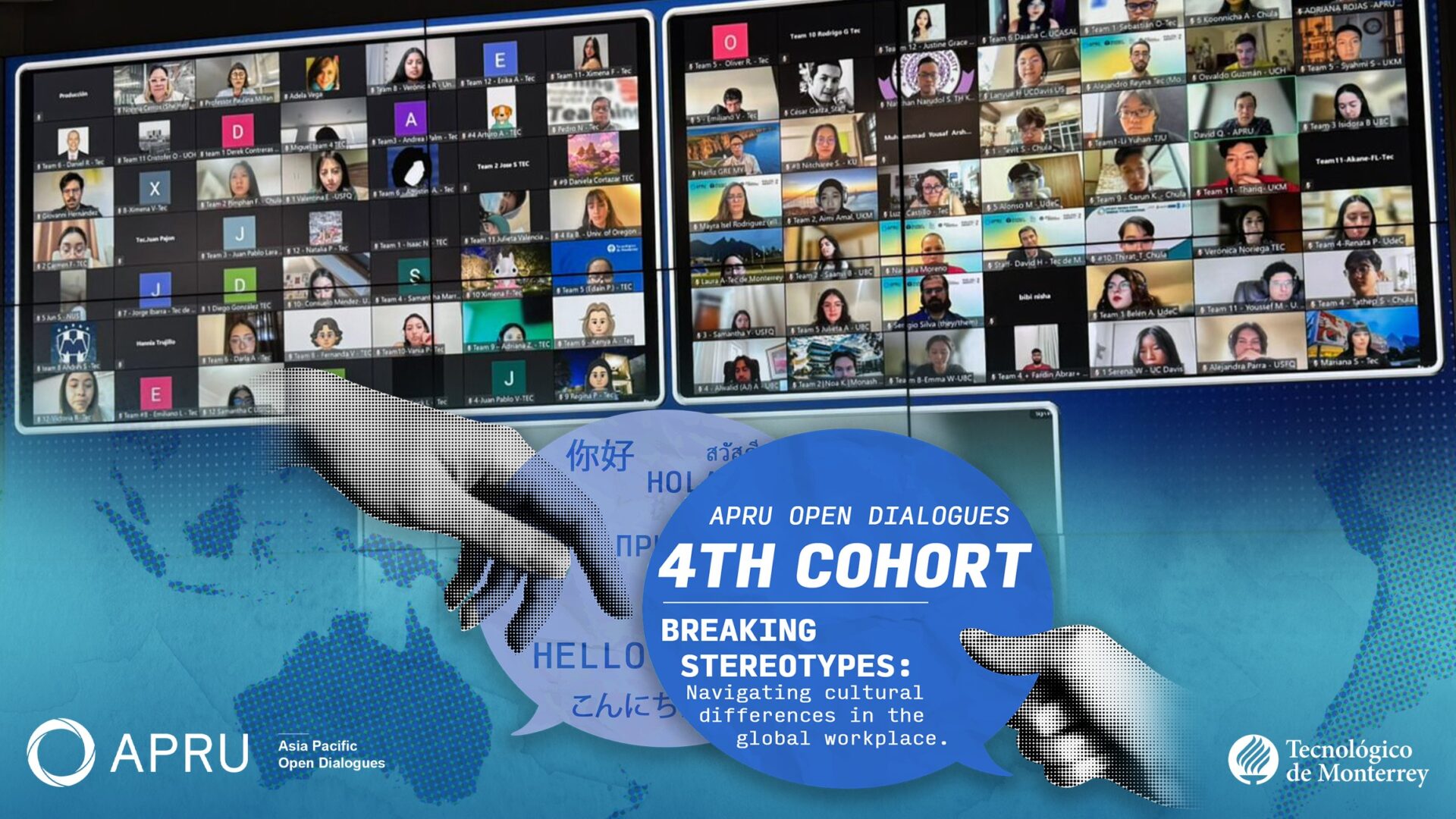
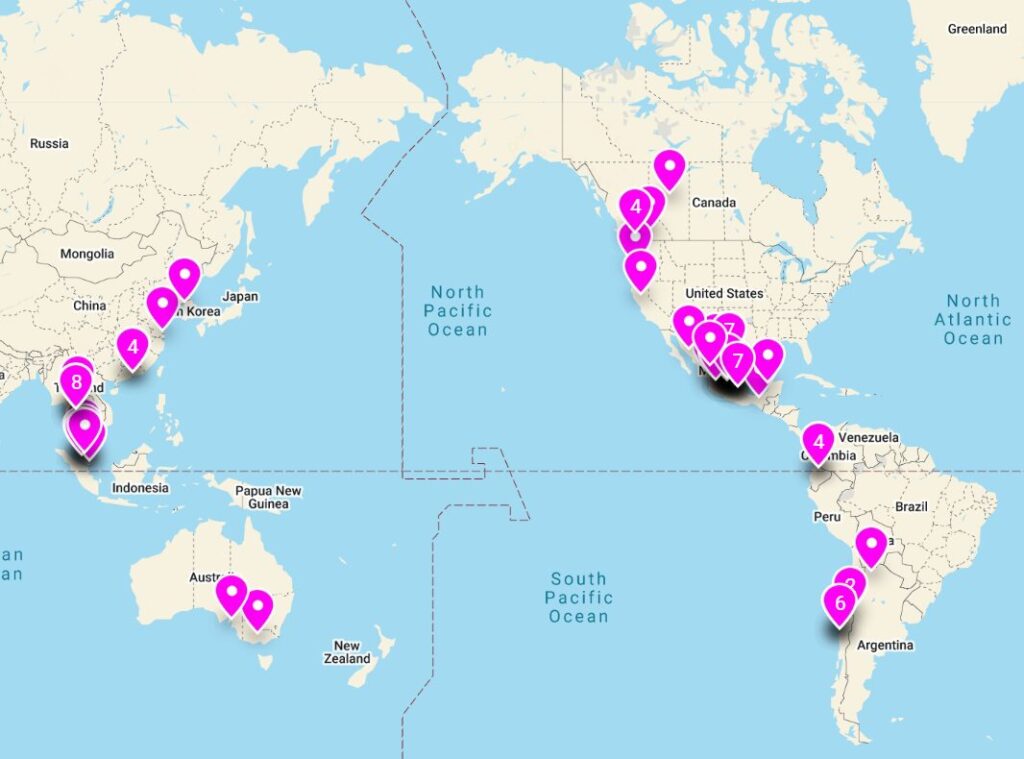
Tecnológico de Monterrey in collaboration with the Association of Pacific Rim Universities (APRU), hosted the APRU Open Dialogues 4th Cohort on May 8th. This edition marked the largest to date, gathering over 150 students and 11 moderators from 21 universities across 14 economies in the Asia-Pacific region. This year’s session focused on discussing and reflecting on an increasingly relevant theme: the role of cultural stereotypes in shaping teamwork and leadership.
The event was led by Professor Norma Cerros, a published author, and a gender equality advocate, and Mr. David Quimbayo, Programs Manager from APRU. They were joined by a team of expert moderators from Mexico, Chile, and Ecuador, who facilitated a dynamic and reflective dialogue process for the students.

Professor Cerros emphasized the importance of gaining awareness of our own stereotypes, prejudices, and biases, how they can hinder our decision-making, and prevent us from taking into consideration valuable ideas.
“Sooner rather than later, you’re going to be in front of a team, and there’s a chance you may be the leader. And there’s a chance that based upon what you have learned, the values that you have been taught, you might not be taking into consideration all of the talent that people have to offer.”
-Norma Cerros, Lead Professor.
The focus of these dialogues is very relevant to today’s world. As the global workplace becomes more interconnected, collaboration across cultures is both vital and complex. Recognizing how stereotypes influence communication and group dynamics is key to building stronger, more inclusive teams.
During his opening remarks, Dr. David Huerta, Director of International Experiences and Models at Tecnológico de Monterrey, emphasized the growing need for cultural adaptability in today’s remote and global work environments. He highlighted how cultural awareness, adaptability, and clear communication are critical in avoiding misunderstandings rooted in assumptions.
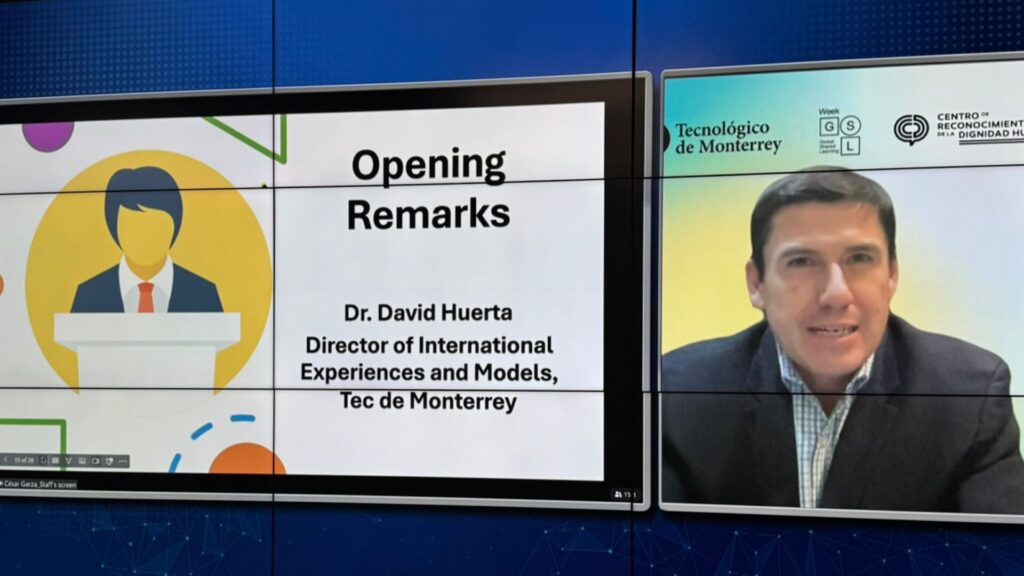
“I see multicultural teams like navigating in a river with many currents. We cannot assume everyone rows in the same direction. If we do, we might end up going in circles or even hitting rocks. But when we listen, we adjust, and we learn each other’s rhythm, we move forward, together, faster, and stronger.”
-Dr. David Huerta
Throughout the session, the dialogue offered participants valuable insights into multicultural collaboration, emphasizing the importance of trust, empathy, and human connection. Students were encouraged to reflect on their own biases and experiences, leading to a more profound understanding of global diversity. The atmosphere fostered authentic conversations, allowing students to share openly and challenge their own perspectives. This not only enhanced their cultural competence but also supported their personal growth.
“My take on this meeting is that it’s really a crucial thing to build rapport and bond first, in order to achieve the desired goals everyone has.”
-Student from the Philippines
“It’s interesting that while we were discussing a scenario, we were part of a simulation as well. It was lovely meeting different people with new perspectives, it has expanded my lenses.”
-Student from Ecuador
To close the event, guest speaker Rocío Rodríguez shared reflections from her experience working on global projects and collaborating with international teams. She underscored the importance of empathy and open-mindedness in developing successful intercultural relationships.
In conclusion, as today’s students prepare to become tomorrow’s global leaders, initiatives like the APRU Open Dialogues keep playing a vital role in cultivating the intercultural awareness needed to thrive in a diverse world. By creating safe spaces for honest reflection and meaningful exchange, these open dialogues help break down barriers and build bridges across cultures.